Have you ever tried searching for a meditation course, only to end up overwhelmed by endless options, mixed reviews, and confusing promises? You’re not alone. With so many platforms, styles, and teachers out there, figuring out which programs actually work can feel harder than meditating itself. That’s exactly why I put together this guide on the best meditation courses available today.
In this post, you’ll find hand-picked programs for every level, beginners who are just getting started, intermediate practitioners ready to deepen their practice, advanced meditators looking for more serious training, and those who want a credible meditation teacher certification. Each course comes with a short, helpful review so you can quickly understand what it’s about, who it’s for, the benefits, and the drawbacks. Let’s get straight to the courses and help you choose the one that truly fits your journey.
Best Meditation Courses for Beginners
In this section, you’ll find beginner courses that are simple, supportive, and easy to follow even if you’ve never meditated before. These programs focus on building core skills like breath awareness, focus, and relaxation, while helping you understand how meditation actually works in everyday life. If you’ve been wanting a gentle, reliable way to start (without feeling overwhelmed), these are the courses that offer exactly that.
1. Limitless Life Meditation Program – by Giovanni Dienstmann

Best For
Beginners who need a clear, habit-focused system and a low-risk way to try multiple guided practices.
What This Course Offers
Limitless Life is a multi-course membership built around a practical three-pillar system; habit, technique, and transformation designed to make meditation a consistent part of daily life.
You get a structured 5-week beginner course with 35 daily lessons, focused mini-courses for anxiety, stress, sleep, and deeper practice, plus a library of 50+ guided meditations you can download and use anytime.
Giovanni’s teaching style is action-oriented and simple to follow:
- short daily practices that gradually build up
- clear explanations of multiple meditation techniques
- weekly challenges to keep you motivated
- supportive community + coaching structure
This program is ideal for people who want a clear routine, struggle with consistency, or appreciate having multiple guided audios and small courses in one place.
| Pros | Cons |
|---|---|
| Clear habit-building system and short daily lessons | Membership model may feel unfocused if you prefer a single, linear course |
| Wide range of focused mini-courses (anxiety, sleep, stress) | Less emphasis on deep, lineage-based traditions for advanced practitioners |
| Large guided meditation library (downloadable) | |
| Low-cost trial + affordable monthly price |
Personal Takeaway
A highly practical, beginner-friendly platform that solves the hardest problem for new meditators – building a consistent habit. Great as a first step or a low-risk way to re-ignite a stalled practice.
2. The Power of Awareness – by Tara Brach & Jack Kornfield

Best For
Beginners and early-intermediate meditators who want a structured, psychology-backed introduction to mindfulness with guidance from two world-class teachers.
What This Course Offers
The Power of Awareness is a 7-week mindfulness training designed to help you bring awareness into every part of your life. Your emotions, relationships, work, and the way you handle stress. Taught by Tara Brach and Jack Kornfield, the program combines modern psychology with traditional meditation in a simple, practical format.
Across seven themed weeks, you learn how to:
- build a consistent meditation practice
- work with difficult emotions and thought patterns
- understand reactivity and shift into presence
- cultivate compassion and loving-kindness
- strengthen relationships through mindful communication
- expand awareness into daily life
- deepen practice through a self-guided half-day retreat
The course includes:
- 26 video teachings (10+ hours)
- Weekly mentoring sessions
- Guided meditations for each week
- Journaling prompts
- Self-healing & emotional-healing bonus audios
- Option to earn 19 CE credits
- Certificate of completion from UC Berkeley’s Greater Good Science Center
Overall, it’s a well-rounded, supportive framework for developing both inner calm and emotional resilience.
| Pros | Cons |
|---|---|
| Taught by two of the world’s most respected mindfulness teachers | Not ideal for someone seeking advanced meditation techniques |
| Structured weekly progression (great for beginners) | Requires weekly commitment to get the full benefit |
| Mix of psychology, meditation, and practical tools | |
| Weekly mentoring support | |
| Includes a certificate + option for CE credits |
Personal Takeaway
This program stands out because Tara and Jack teach mindfulness not just as a technique, but as a way of meeting life with clarity and compassion. It’s one of the most grounded and emotionally supportive courses available. Ideal for anyone who wants to build a practice they can trust during difficult moments.
3. Body and Mind Are One – Thich Nhat Hanh

Best For
Beginners and mindfulness seekers who want a gentle, heart-centered approach to presence, emotional healing, and everyday mindfulness, taught through simple practices that bring the mind back to the body.
What This Course Offers
This 8-week online immersion with Thich Nhat Hanh helps you reconnect with your body, settle the mind, and return to the present moment. The focus is on embodied mindfulness, using simple practices like mindful breathing, walking meditation, emotional awareness, and compassionate communication to ground yourself in daily life.
The course explores essential Buddhist teachings such as:
- Interbeing
- The Three Jewels
- Working skillfully with emotions
- Recognizing and transforming unhelpful mental patterns
Each week includes a blend of:
- Dharma talks
- Guided practices
- Journaling/reflection exercises
- Practical applications for daily life
You’ll learn breathing mantras, how to nurture positive mental seeds, how to listen deeply, and how to communicate with compassion. The teachings are gentle, spacious, and deeply supportive, very true to Thich Nhat Hanh’s calming style.
You also receive:
- 7 hours of video teachings
- Full audio version for offline listening
- Weekly journaling prompts
- Q&A sessions with senior monastics
- Bonus programs:
- The Art of Mindful Living
- Drops of Emptiness
- A full 1993 retreat recording
The overall experience is grounding and nurturing, an accessible way to bring mindful presence into real life.
| Pros | Cons |
|---|---|
| Teachings directly from Thich Nhat Hanh | No live interaction with Thich Nhat Hanh (pre-recorded content) |
| Simple, accessible practices for beginners | Slower pace may feel too gentle for those seeking “structured skill-building” |
| Strong focus on presence, emotional healing, and compassion | Less suited for people wanting modern psychology–based instruction |
| High-quality video + full audio version | |
| Meaningful bonus programs that extend the learning |
Personal Takeaway
This course feels like being guided by a wise, loving elder who teaches through simplicity, softness, and presence. If you want to slow down, reconnect with your body, and experience mindfulness as a way of living, not just a technique. This program offers a beautifully grounding path.
4. Unstoppable Joy

Best For
Anyone feeling emotionally drained, overwhelmed, or disconnected from their sense of joy and wants a warm, heart-centered program that blends spiritual wisdom with practical tools you can use in daily life. It’s especially great for beginners who want gentle guidance rather than heavy theory.
What This Course Offers
Unstoppable Joy is a gentle, heart-centered online program inspired by the teachings of His Holiness the Dalai Lama and Archbishop Desmond Tutu. At its core, the course is built around the Eight Pillars of Joy:
- Acceptance
- Gratitude
- Humor
- Compassion
- Forgiveness
- Perspective
- Humility
- Generosity
Instead of seeing joy as something that comes and goes, the program helps you treat it as a steady inner skill you can cultivate daily. Here’s how the learning experience is structured:
Short, Beginner-Friendly Lessons
- Mostly audio teachings that are a few minutes long
- Easy to fit into a busy routine
- Designed to feel supportive, not overwhelming
A Simple Module Rhythm
Every section follows a familiar flow:
- Teach: clear insights explained through real stories
- Practice: short guided exercises
- Reflect: prompts that help you apply the lesson in real life
Real-Life Emotional Themes
Throughout the course, you explore practical topics like:
- Reframing difficult experiences
- Softening self-criticism
- Building inner steadiness
- Lightening emotional heaviness with humor
- Opening the heart with compassion and forgiveness
What makes the program stand out is its emotional warmth. There’s no pressure to be positive or perfect, it’s all about gently reconnecting with your own inner ease, step by step.
| Pros | Cons |
|---|---|
| Warm, compassionate teaching style that feels encouraging rather than heavy. | Not ideal if you want advanced meditation instruction or longer practices. |
| Short lessons that make the course easy to stick with. | More emotional/spiritual than scientific, may not be the best match for people looking for research-based frameworks. |
| Practical reflections and journaling prompts for emotional clarity. | Not structured around habit-building or productivity-style training. |
| Based on real dialogues and lived experiences of the Dalai Lama & Archbishop Tutu. | |
| Focuses on inner resilience, not quick-fix positivity. | |
| Great entry point for beginners or anyone new to introspective practices. |
Personal Takeaway
What stood out to me is how human this course feels. The lessons aren’t trying to impress you, they’re trying to soften the edges of everyday life. It won’t give you dramatic quick wins, but it will give you something more valuable: a grounded, steady way to reconnect with joy even when things are messy or uncertain.
Best Meditation Courses for Intermediate Practitioners
Once you’ve built a steady foundation with beginner-friendly practices, the next step is usually the same for most meditators: you want to go deeper, but you don’t want to feel lost or overwhelmed. That’s exactly where intermediate-level meditation courses shine. In this section, you’ll find some of the best meditation courses designed for people who already know the fundamentals but want to expand their practice in a meaningful, structured way.
1. Embracing All of You
Best For
Anyone who feels stuck in emotional triggers, inner conflict, or old patterns that don’t make sense on the surface and wants a gentle, trauma-aware approach to self-understanding and healing.
What This Course Offers
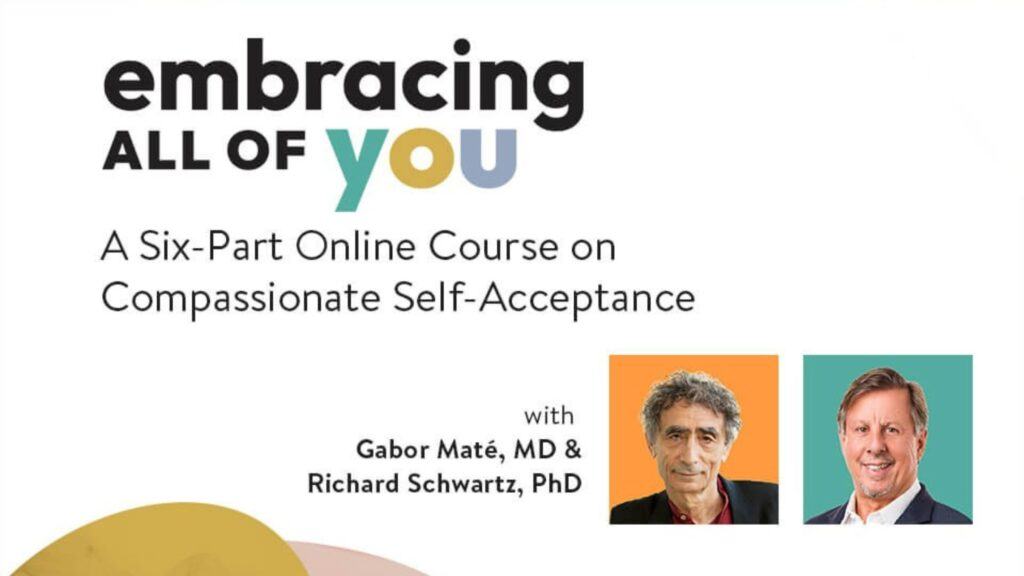
It is a six-session online program taught by Dr. Gabor Maté and Dr. Richard Schwartz, two leaders in trauma-informed healing. The course blends Compassionate Inquiry (CI) and Internal Family Systems (IFS) to help you better understand your emotional patterns and the wounded inner parts that drive them.
Here’s a structured breakdown of what the course covers:
- How early experiences shape your inner world and influence reactions, triggers, and beliefs.
- IFS fundamentals – learning about protectors, wounded parts, and how to meet them with curiosity rather than resistance.
- Compassionate Inquiry basics – exploring the mind-body connection, emotional wounds, and the roots of stress.
- Trauma, addiction & emotional patterns – viewing them not as “problems,” but as adaptations that once protected you.
- The link between physical health and emotional stress, including how the body carries unresolved experiences.
- Spiritual growth & self-discovery, with themes of presence, inner peace, and reconnecting with your true self.
The course includes demonstrations of CI and IFS, reflective exercises, and a self-paced structure that allows you to move slowly, revisit lessons, and process at your own rhythm. The tone throughout is gentle, compassionate, and supportive, ideal for anyone who wants deeper insight without feeling overwhelmed or judged.
| Pros | Cons |
|---|---|
| Two highly respected teachers combining CI + IFS | No live or interactive guidance, which some learners may prefer |
| Holistic approach covering mind, emotions, behavior, and the body | Requires emotional readiness, as topics like trauma and addiction can feel intense |
| Self-paced format ideal for deeper reflection | Results depend on personal commitment, since it’s fully self-paced |
| Practical insights you can apply to real emotional triggers | |
| Warm, non-judgmental teaching style |
Personal Takeaway
What stands out most is the course’s invitation to welcome every part of yourself, especially the ones you usually ignore, fight, or feel ashamed of. Even just reading the curriculum feels grounding. It is a reminder that healing starts not with fixing yourself, but with understanding yourself gently. For anyone navigating emotional triggers or wanting a compassionate path to self-awareness, this program seems like a meaningful next step.
2. Mindfulness-Based Mind Fitness Training (MMFT®)
Best For
People who want a science-backed, resilience-building program that strengthens stress tolerance, emotional stability, and decision-making, especially those dealing with chronic stress, high-pressure roles, past trauma, or long-term dysregulation.
What This Course Offers
MMFT® is an 8-week, neuroscience-based training created by Dr. Elizabeth Stanley to help you widen your “window of tolerance” and stay clear-headed under pressure. Instead of focusing only on traditional meditation, this course blends mindfulness with body-based trauma regulation skills. It’s designed for anyone who feels overwhelmed by stress, struggles with emotional reactivity, or notices that their body stays “on alert” long after a challenge has passed.
Across eight structured modules, you learn:
• The five core mind-fitness skills: attention, emotional intelligence, mental agility, situation awareness, and self-regulation.
• How stress and trauma actually work in the nervous system – and how to retrain your mind and body through neuroplasticity.
• How to identify personal stress triggers and interrupt automatic patterns that keep you stuck in survival mode.
• Practical mind-body tools to calm the autonomic nervous system, improve decision-making, work with emotional pain, and reduce chronic stress symptoms.
• How to build resilience through “window-widening habits,” healthier coping responses, and intentional choices.
Each week includes guided practices, daily exercises, reflective prompts, and body-awareness techniques you can use in real-time stressful situations. You also get powerful bonuses on pain healing and healthy sleep, which support long-term recovery and nervous system balance.
Overall, the program feels structured, scientific, and deeply practical. Ideal for anyone who wants more than “relaxation techniques” and is ready to genuinely rewire their stress response.
| Pros | Cons |
|---|---|
| Strong science-based foundation rooted in neurobiology | More intensive than typical mindfulness courses |
| Focuses on both mindfulness and body-based regulation | Not ideal if someone wants a light, purely meditation-based program |
| Extremely practical for real-world stress and decision-making | Requires daily practice for best results |
| Clear structure with weekly progression | |
| Useful bonuses on pain healing and sleep | |
| 1-year money-back guarantee |
Personal Takeaway
This is one of the most grounded and research-backed mindfulness programs available. Especially for people who feel their stress response kicks in too quickly or stays activated for too long. The mix of mindfulness, trauma-informed methods, and practical habits makes it a powerful choice for anyone wanting to feel calmer, stronger, and more in control under pressure.
3. Body as Healer – Peter Levine, PhD
Best For
Anyone dealing with chronic pain, emotional overwhelm, or long-held trauma who wants a gentle, body-based approach to healing. Especially helpful for people who haven’t found relief through traditional mindfulness or talk-therapy-only methods.
What This Course Offers
Body as Healer is a step-by-step online program that introduces you to Dr. Peter Levine’s Somatic Experiencing® approach, a method designed to help the body gently release stored tension, trauma, and chronic pain patterns. The course is structured across six modules, each focusing on a core piece of the healing process.
- Module 1 – Understanding Pain & Trauma: Learn how pain shows up in the body, why it lingers, and try a foundational exercise that begins easing tension.
- Module 2 – Reconnecting With the Body: Explore interoception, safety, boundaries, and simple practices that build comfort inside your body.
- Module 3 – Nervous System Strength: Understand stress physiology and use grounding, imagery, and breath-based tools to calm the system.
- Module 4 – Approaching Pain Gently: Work with pendulation, emotional regulation, and shifting your relationship to discomfort.
- Module 5 – Releasing Suppressed Emotion: Learn how trapped emotional energy contributes to physical pain and how to let the body unwind at its own pace.
- Module 6 – Repair & Renewal: Repattern old habits, release stored emotional residue, and apply everything you’ve learned to daily life.
The program is designed to be practiced slowly, with many people seeing benefits within weeks, and deeper transformations unfolding over months.
| Pros | Cons |
|---|---|
| Gentle, body-first approach ideal for trauma-sensitive learners | Not a quick-fix, requires consistent practice over months |
| Highly practical exercises that don’t feel overwhelming | No live support; self-paced format may feel isolating for some |
| Taught by the founder of Somatic Experiencing® | Concepts can feel unfamiliar if you’re new to somatic work |
| One-year money-back guarantee | |
| Suitable for chronic pain, PTSD patterns, emotional dysregulation, and long-term stress |
Personal Takeaway
This course stands out because it shifts healing from a mental effort to a body-supported experience. Instead of pushing yourself to “cope better,” you learn how to listen to your body, build safety from the inside out, and gradually unwind old patterns that keep pain or overwhelm stuck. It’s gentle, structured, and remarkably empowering.
4. The Science of Medical Intuition
Best For
Wellness seekers who want a structured introduction to medical intuition, especially those curious about tuning into the body’s subtle signals in a down-to-earth, teachable way.
What This Course Offers
This program introduces you to the foundations of medical intuition in a way that feels grounded and easy to follow. The lessons are broken down into simple steps so you can start noticing physical, emotional, and energetic patterns with more clarity.
Here’s what the course helps you do:
- Understand the body’s “signals.”
You learn how to interpret subtle sensations, tension, and shifts in energy without overthinking or guessing. - Identify stress patterns.
The course explains how long-term stress and emotional history can show up physically, giving you a practical way to connect the dots. - Build self-awareness.
You’re guided to tune into your inner cues through short exercises that help you notice what your body is trying to communicate. - Blend intuition with mindfulness.
Instead of treating intuition as something mystical, the program shows how awareness, presence, and curiosity naturally support intuitive insight. - Practice with a step-by-step approach.
The pacing is gentle, examples are relatable, and each lesson encourages gradual, consistent practice rather than expecting instant results.
Overall
This is a friendly introduction to medical intuition that focuses on practical skills rather than abstract ideas. By the end, you’ll have simple techniques for understanding your body’s signals and building trust in your own awareness.
| Pros | Cons |
|---|---|
| Teaches medical intuition in a structured, accessible format | Not ideal for advanced students seeking deep clinical application |
| Clear explanations suitable for complete beginners | Requires regular practice to see meaningful results |
| Useful guided exercises to practice awareness | Some concepts may feel unfamiliar if you’re new to body-based awareness |
| Balanced blend of intuition, somatic awareness, and mindfulness |
Personal Takeaway
A helpful starting point if you want to understand medical intuition in a grounded, step-by-step way. The lessons make the topic feel approachable, especially if you’re curious but unsure where to begin.
Best Meditation Courses for Advanced Practitioners
Once you’ve been meditating for a while, there comes a point where you’re not just looking for “more techniques” you’re looking for depth. The courses in this section are designed exactly for that. These programs go beyond the basics and invite you into more refined practices, deeper self-inquiry, and teachings that stretch your perspective in meaningful ways.
1. Insight Meditation
Best For
Anyone who wants a steady, grounded introduction to Vipassana and needs help building a daily meditation practice that actually sticks. It’s especially helpful if you appreciate gentle guidance, relatable explanations, and teachers who make ancient teachings feel practical in everyday life.
What This Course Offers
This 12-session program breaks down the core principles of Vipassana (Insight Meditation) in a way that feels clear, approachable, and deeply supportive. Sharon Salzberg and Joseph Goldstein guide you step-by-step through the essentials of mindfulness, from grounding yourself in the breath to understanding how thoughts, emotions, and patterns shape your experience.
Here’s what you can expect inside the course:
Step-by-Step Learning
- Guidance through the foundations of mindfulness
- Support in building awareness, patience, and compassion
- Sessions that build gradually so you never feel overwhelmed
Practical Buddhist Teachings
You’ll explore essential concepts such as:
- The Five Precepts
- The Four Noble Truths
- The Five Hindrances
- Karma and intention
- The Eightfold Path
All explained in simple, practical language so you can use them in daily life, not just understand them intellectually.
Real Practices You Can Apply
The course includes a variety of techniques, such as:
- Sitting meditation
- Walking meditation
- Working with desires and emotions
- Navigating obstacles like doubt, restlessness, and sleepiness
- Opening the heart with lovingkindness (Metta)
- Cultivating equanimity during stressful moments
By the end of the course, you’ll have a complete, sustainable framework for developing a meditation practice that grows with you—rooted in clarity, kindness, and steady, mindful awareness.
| Pros | Cons |
|---|---|
| Clear, beginner-friendly explanations of Vipassana | The spiritual concepts may feel dense for absolute beginners |
| World-class teachers with decades of experience | No live component for direct teacher interaction |
| Practical tools for working through common obstacles | Requires personal discipline to follow the full 12-session journey |
| Includes guided meditations and downloadable resources | |
| Strong focus on building a sustainable daily practice |
Personal Takeaway
This course shines because Sharon and Joseph make Vipassana feel simple, doable, and genuinely supportive. It gives you everything you need to start a meditation practice and more importantly, to continue it with confidence. The lessons feel gentle yet profound, and the guided practices help you understand your mind in a new, compassionate way.
2. iRest Yoga Nidra Immersion – by Richard Miller & Stephanie Lopez

Best For
Meditators who want a structured, science-backed path to deep rest, emotional healing, and inner resilience.
What This Course Offers
iRest Yoga Nidra Immersion is an 8-week online program that teaches a modern, science-informed approach to Yoga Nidra meditation. The course guides you through the full 10-step iRest protocol, helping you develop a consistent meditation practice while addressing physical, emotional, and mental well-being.
Richard Miller and Stephanie Lopez provide clear, step-by-step instruction, blending Eastern wisdom with Western psychology, making the practices accessible even for beginners.
Course Highlights:
- Weekly Focus: Each week targets a different aspect of iRest, including:
- Aligning with intentions
- Welcoming and working with emotions
- Creating a personal Yoga Nidra practice
- Resetting the nervous system
- Deepening self-awareness and inner joy
- Practical Techniques: Integrates guided visualizations, body scanning, and breathwork
- Learning Materials: Includes downloadable guided meditations, a digital workbook, and bonus meditations
- Outcomes: Participants gain tools to:
- Manage stress effectively
- Enhance emotional resilience
- Cultivate a profound sense of well-being in daily life
By the end of the program, you’ll have a structured framework for regular practice, along with practical skills to maintain long-lasting inner balance and clarity.
| Pros | Cons |
|---|---|
| Step-by-step weekly guidance with clear instructions | Requires regular practice for best results |
| Combines Yoga Nidra with neuroscience-backed techniques | Concepts may feel abstract for complete beginners |
| Guided meditations and downloadable materials | 8-week duration may feel long for some learners |
| Lifetime access to all lessons and bonuses | |
| Supports emotional healing, stress reduction, and deep rest |
Personal Takeaway
iRest Yoga Nidra Immersion offers a structured, practical way to build a lasting meditation practice. The integration of mind, body, and emotions makes it a transformative course for those seeking genuine rest and inner balance.
3. Shadow Course
Best For
Anyone ready for deep emotional healing, inner work, and understanding the unconscious patterns that shape their life.
What This Course Offers
The Shadow Course is an eight-week online program designed to help you work with the hidden parts of your personality, your shadow, so you can live with more clarity, emotional maturity, and authenticity. Taught by Caroline Myss and Andrew Harvey, the program blends psychology, spirituality, archetypal wisdom, and practical self-inquiry.
Here’s what the course covers in an easy-to-digest format:
- 12 audio sessions that explore how shadow patterns show up in:
- Relationships
- Repeating emotional cycles
- Stress, conflict, and self-sabotage
- Old wounds and unconscious beliefs
- Clear, direct teachings that help you understand:
- Personal archetypes
- Emotional triggers
- Hidden fears
- The “golden shadow” (your suppressed strengths)
- Collective or cultural conditioning
- Practical self-reflection exercises that help you identify why you react, shut down, or feel overwhelmed
- Guidance for working through difficult emotions without spiritual bypassing or vague “positivity”
- Tools for building emotional resilience, healthier patterns, and deeper self-awareness
This course is especially helpful if you often feel:
- Stuck in old patterns
- Overwhelmed or reactive
- Blocked in relationships
- Unsure how to manage intense emotions
| Pros | Cons |
|---|---|
| Deep, structured inner work guided by highly respected teachers | Emotionally intense, not a light or casual course |
| Practical frameworks (archetypes, emotional patterns, shadow behaviours) | Some concepts are abstract if you’re completely new to shadow work |
| Supports emotional healing and long-term self-awareness | Requires consistency to benefit fully from weekly practices |
| Audio sessions + bonus trainings add depth and variety | |
| Great for people who want clarity, not theory |
Personal Takeaway
This course stands out because it doesn’t sugarcoat the process. It’s honest, grounded, and gives you a realistic path for understanding the deeper layers of your psyche. If you’re ready to face yourself with courage and compassion, this program offers meaningful guidance and long-term transformation.
4. Living From a Place of Surrender – by Michael A. Singer
Best For
Anyone who feels stuck in overthinking, emotional reactivity, or inner resistance and wants a practical, spiritual method to let go of mental clutter and experience deeper freedom.
What This Course Offers
Living From a Place of Surrender is an eight-session video course by Michael A. Singer that teaches a practical and transformative approach to inner freedom by helping you release the mental and emotional blockages that keep you stuck.
You’ll learn how to:
- Understand why your mind never stops talking
- Recognize what your mind is constantly talking about
- Release inner disturbances instead of trying to control or suppress them
Throughout the eight sessions, you explore foundational teachings such as:
- Discovering your True Self and connecting with the “seat of awareness”
- Witnessing life without resistance and allowing experiences to pass through you
- Understanding how the mind creates an “alternate universe” of stories and reactions
- Letting go of preferences, emotional patterns, and egoic attachments that restrict inner flow
You also learn practical inner work tools, including:
- Opening the heart without clinging or resisting life’s experiences
- Relaxing into difficult moments instead of tightening around them
- Applying Singer’s “Relax & Release” technique in everyday situations
The course also includes bonus audio teachings on work life and spiritual activism, adding depth and real-world relevance.
| Pros | Cons |
|---|---|
| Clear, practical teachings on surrender and letting go | Requires consistent inner work to see results |
| Deep spiritual insights explained in simple language | More spiritually oriented, may not suit those seeking strictly psychological tools |
| Applicable to real-life situations (work, relationships, stress) | No peer community or live interaction |
| Includes bonus audio sessions for extra guidance |
Personal Takeaway
This course is powerful if you’re ready to stop fighting with your inner world. The teachings help you understand your mind’s patterns at a deep level and offer a reliable method ‘Relax & Release‘ for freeing emotional energy and living with much more ease.
5. Your True Calling – by Stephen Cope
Best For
Anyone feeling stuck, directionless, or unsure about their life purpose. Those navigating major transitions or wanting more meaning in their work or daily life. Students of yoga, mindfulness, or personal growth who want a structured, action-based approach to purpose.
What This Course Offers
Your True Calling is an eight-week online course by Stephen Cope that provides a practical, structured roadmap for discovering your life purpose. Instead of broad motivational ideas, it uses a time-tested framework from the Bhagavad Gita to help you understand your gifts and align your daily actions with deeper meaning.
Here’s what the course covers:
- Understanding your unique gifts and what sets you apart
- Recognizing inner obstacles such as fear, doubt, and confusion
- Exploring the relationships and life patterns that shape your growth
- Learning to listen to inner guidance through reflection and yogic wisdom
- Breaking down Dharma (your sacred duty) in a grounded, relatable way
Throughout the eight sessions, Cope blends:
- Psychology
- Storytelling and real-life examples
- Yogic philosophy
- Actionable reflection exercises
You’ll also work through practical tools to:
- Clarify strengths and hidden patterns
- Work through self-doubt and resistance
- Take steady, courageous steps toward purpose, without chasing outcomes
- Build emotional steadiness and resilience
By the end, the course offers a clear, actionable framework to help you move toward a life of purpose, presence, and confidence, one steady step at a time.
| Pros | Cons |
|---|---|
| Clear, structured framework for identifying and living your purpose | Requires consistent weekly reflection and journaling |
| Blends psychology + yogic wisdom in an accessible way | More philosophical than technique-based |
| Reflective exercises that create real clarity | Some may prefer a shorter, faster-paced program |
| Encouraging and grounded teaching style | |
| Bonuses add emotional, scientific, and nature-based insights |
Personal Takeaway
This course stands out because it gives you a practical path of action, not just inspiration. The blend of Bhagavad Gita wisdom with modern psychology makes the teachings applicable even if you’re not familiar with Indian philosophy. If you’ve been struggling to find clarity, direction, or courage around your next steps in life, this course provides a compassionate and structured way forward.
Best Meditation Teacher Training & Certification Programs
Choosing the right meditation teacher training can feel overwhelming, especially with so many programs promising depth, certification, and personal transformation. This list highlights reputable, beginner-friendly options that offer solid teaching skills, practical guidance, and a supportive learning structure. Whether you want to deepen your own practice or start teaching professionally, these programs provide clear pathways to build confidence, knowledge, and real-world experience.
1. The Mindfulness Teaching Toolkit

Best For
Aspiring mindfulness teachers who want ready-to-use teaching materials, structured guidance, and support in building a professional practice.
What This Course Offers
The Mindfulness Teaching Toolkit is a comprehensive, all-in-one resource created to support new and growing mindfulness teachers from the very beginning. Instead of spending hours on lesson planning, meditation writing, student engagement, or business strategy, this toolkit gives you a library of brandable, customizable, and practical teaching materials that eliminate guesswork and save significant time.
Here’s what the toolkit includes:
90 Minutes of Complete Teaching Curriculum
- Pre-written lesson script
- Student workbook
- Customizable slide deck
- Ready to use for group classes, workshops, or introductory sessions
- Helps you start teaching immediately with a structured, professional setup
Three Expert-Led Masterclasses
- Guided Meditation Content Masterclass – learn to create high-quality, meaningful guided meditations
- Growth Marketing Masterclass – understand how to reach your ideal students and grow your teaching business
- Selling Mindfulness Services Masterclass – learn to offer your services with confidence and integrity
Extensive Teaching Resources
- 200 guided meditation scripts, covering:
- Stress reduction
- Emotional resilience
- Self-compassion
- Grounding
- Relationship well-being
- 300 mindfulness worksheets on themes like:
- Emotional intelligence
- Personal growth
- Self-discovery
- Healthy relationships
These resources help you create engaging, high-quality sessions without the need to constantly produce new content from scratch.
| Pros | Cons |
|---|---|
| Huge library of done-for-you content (scripts, worksheets, curriculum) | Not a certification program (you may need certification separately) |
| Masterclasses that help with teaching, marketing, and selling | Best suited for teachers wanting structured materials, not theory-heavy training |
| Customizable materials for workshops, classes, and online courses | Requires self-direction to apply the resources effectively |
| Saves significant time for new teachers | |
| Supports both teaching skills and business growth |
Personal Takeaway
This toolkit fills a major gap for new teachers: the need for high-quality, ready-to-teach content. It dramatically reduces overwhelm and gives you a clear, confident start. If you want practical support, not more theory, this resource can accelerate your teaching journey in a meaningful way.
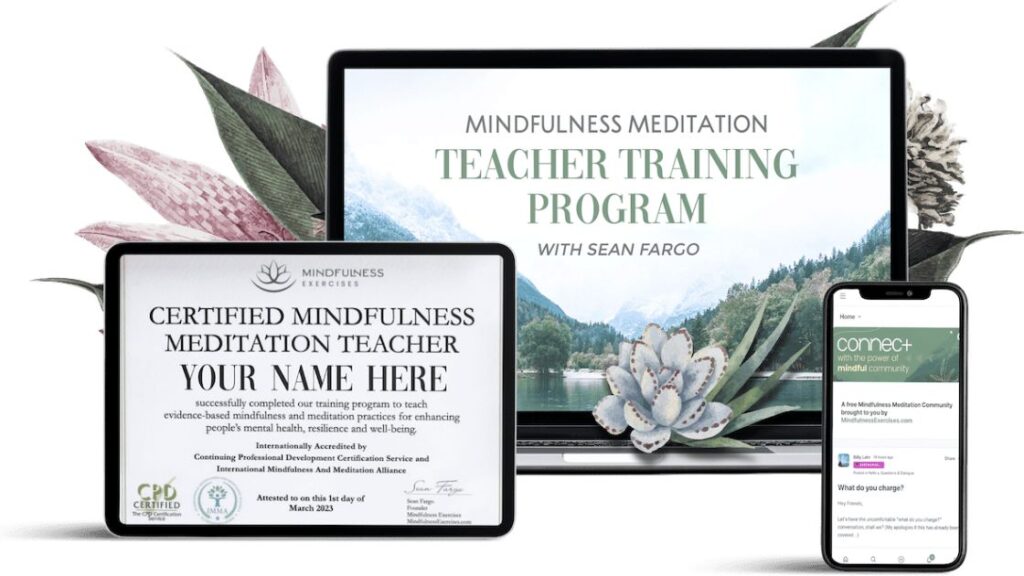
2. Mindfulness Teacher Training Program by Sean Fargo
Best For
Beginners to intermediate practitioners who want a clear, supportive, and practical path to becoming a confident mindfulness teacher, without needing prior teaching experience.
What This Course Offers
The Mindfulness Teacher Training by Sean Fargo is a beginner-friendly yet comprehensive program that helps you build real teaching confidence through practice, structure, and ongoing support. Instead of overwhelming you with theory, the training focuses on giving you practical tools you can use immediately, even if you’re brand-new to teaching.
Here’s what the program includes:
- Daily bite-sized lessons that break complex concepts into simple, doable steps.
- Guided meditation scripts you can use for personal practice or to lead groups confidently.
- Weekly group coaching calls for direct guidance, feedback, and community support.
- Teaching practice sessions, where you can lead meditations in a safe, encouraging environment.
- Modules on teaching skills, including creating safe spaces, trauma-sensitive considerations, and designing mindfulness-based sessions.
- Business and ethical guidance, helping you understand how to share mindfulness professionally and responsibly.
- A library of worksheets, scripts, and templates so you don’t have to create everything from scratch.
What makes this training especially helpful is Sean’s approach: it’s gentle, supportive, and grounded in real-world experience. You’re not just memorizing concepts, you’re learning how to hold space, guide others with clarity, and build a sustainable teaching practice with confidence.
| Pros | Cons |
|---|---|
| Easy-to-follow lessons designed for absolute beginners | Requires self-discipline since the course is self-paced |
| Strong community and live support | No deep dive into Buddhist or traditional lineage-based teachings |
| Hands-on teaching practices to build confidence | Certification process may feel lengthy for those wanting quick results |
| Large library of ready-to-use teaching materials | |
| Ethical and trauma-informed approach |
Personal Takeaway
This program stands out because it makes teaching mindfulness feel accessible, even if you’ve never led a session before. The combination of structure, practice, and support creates a solid foundation that helps new teachers build confidence step-by-step. It’s one of the most beginner-friendly and practical teacher trainings available online.
3. Mindfulness Meditation Teacher Certification Program by Jack Kornfield & Tara Brach

Best For
Aspiring meditation teachers who want a rigorous, lineage-based, psychology-informed 2-year certification with mentorship and practicum experience.
What This Course Offers
The Mindfulness Meditation Teacher Certification Program (MMTCP) is a 2-year, in-depth training designed to help you become a skilled, ethical, and confident meditation teacher. Led by Jack Kornfield and Tara Brach, two of the most respected voices in modern mindfulness, the program blends Buddhist psychology, clinical insights, and practical teaching skills to help you both deepen your personal practice and learn how to guide others with clarity and compassion.
What you’ll explore and receive:
- Core Mindfulness Foundations, including body scan, mindful movement, open awareness, inquiry, and heart-based practices.
- Emotional and Psychological Understanding, covering trauma sensitivity, evolutionary psychology, emotional healing, and the roots of suffering.
- Teaching Skills & Competency Training, such as giving talks, leading groups, offering guided meditations, and responding to student questions.
- Research-Based Learning on the effects of meditation, compassion training, and neuropsychology.
- Somatic Awareness, helping you understand how the body, emotions, and states of mind are interconnected.
- Applied Mindfulness, including how to teach in workplaces, communities, and in contexts involving pain, trauma, and relational conflict.
- Ethics & Professional Guidelines for building a safe, trustworthy teaching presence.
- Guest Teachings from leaders like Eckhart Tolle, Kristin Neff, Dan Siegel, and more.
- Structured Mentorship, including monthly small-group calls and three 1:1 mentoring sessions.
- A Year-Two Practicum, where you design and lead real classes in your local community to gain hands-on teaching experience.
- Community Support, receiving guidance, feedback, and encouragement from a global cohort of practitioners.
Overall, the program offers a rigorous pathway to becoming a grounded, compassionate, and skillful meditation teacher.
| Pros | Cons |
|---|---|
| 2-year structured curriculum that goes deep into both practice and teaching skills. | Long duration (2 years) may feel like a big commitment for some. |
| Mentorship support ensures guidance, accountability, and community connection. | Requires prerequisites, including a 6-night silent retreat and the Power of Awareness course. |
| Led by world-renowned teachers with decades of experience. | Premium pricing, making it less accessible for students on a tight budget. |
| Hands-on practicum in year two helps you build real confidence. | |
| Strong credibility through certification from ATI & UC Berkeley’s Greater Good Science Center. |
Personal Takeaway
This program is one of the most respected and comprehensive meditation teacher trainings available. It not only strengthens your personal practice but also gives you the structure, mentoring, and real-world experience needed to teach confidently. If you want serious training, ethical grounding, and global recognition, this certification stands out as a gold-standard path.
4. Brandable Mindfulness Teaching Curriculum by Sean Fargo

Best For
New or aspiring mindfulness teachers who want a ready-to-use, professional curriculum to start teaching immediately without creating materials from scratch.
What This Course Offers
The Brandable Mindfulness Teaching Curriculum is a fully customizable 10-session program designed to help mindfulness teachers launch their classes quickly and confidently. With both adult and teen versions, this curriculum provides everything you need to guide students through essential mindfulness practices over a 10-week period.
Key features include:
- Brandable Presentations: 10 ready-to-use, professionally designed slide decks for each session that you can personalize with your name and logo.
- Student Workbooks: 10 workbooks complementing each session, packed with exercises and reflections to reinforce learning.
- Teaching Guidebooks: Step-by-step instructions for each session, ensuring smooth delivery and consistent engagement.
- Comprehensive Curriculum Guidebook: Tips for course setup, teaching strategies, marketing, and overall program management.
- Adult & Teen Formats: Sessions tailored for specific audiences, covering topics like mindfulness of emotions, resilience, work-life balance, relationships, and self-compassion.
- 4 Valuable Bonuses:
- Deep Dives on teaching techniques and student engagement
- Online course on guiding mindfulness meditations for well-being
- 200 guided meditation scripts for various practices
- 300 mindfulness worksheets for student exercises and reflections
- Brandable Social Media Templates & eBook: 365 customizable social media posts and a fully brandable 22-page beginner meditation eBook to grow your online presence and attract students.
This curriculum allows teachers to start teaching immediately, maintain professionalism, and save months of preparation time while building a strong, credible brand.
| Pros | Cons |
|---|---|
| Fully ready-to-use and brandable curriculum for immediate teaching. | Focused on structure and delivery; less emphasis on deep meditation theory. |
| Includes adult and teen formats for versatility. | Requires additional investment for full access to bonuses and templates. |
| Comprehensive teaching tools: presentations, workbooks, guidebooks, scripts, and worksheets. | Best suited for teachers ready to start teaching soon, less ideal for beginners seeking in-depth meditation training. |
| Supports marketing and client engagement with social media templates and brandable eBook. | |
| Saves significant time in curriculum development. |
Personal Takeaway
This curriculum is a game-changer for new mindfulness teachers, offering a plug-and-play solution to start teaching immediately. It provides professionalism, brandability, and resources to ensure you deliver impactful sessions without reinventing the wheel. Perfect for teachers wanting to accelerate their teaching career and build a strong online presence.
Final Thoughts
Finding the right meditation course can feel overwhelming, but the programs featured here offer clarity, structure, and genuine guidance for every level. Whether you’re just starting your meditation journey, seeking deeper personal growth, or aiming to become a confident mindfulness teacher, there’s a course tailored to your needs.
Ultimately, the best meditation course is one that fits your goals, schedule, and learning style. With this curated selection, you can take the guesswork out of your search and confidently choose a program that supports both your personal growth and professional aspirations.
Please note I receive compensation if you click on any links mentioned in this post to purchase a product or service from a third-party website. Also, purchasing a product or service from the above links does not increase your purchase price, however, it is a great way to thank me if you enjoy my content and find my suggestions useful. I only recommend products and services that I have personally used or thoroughly researched.
