
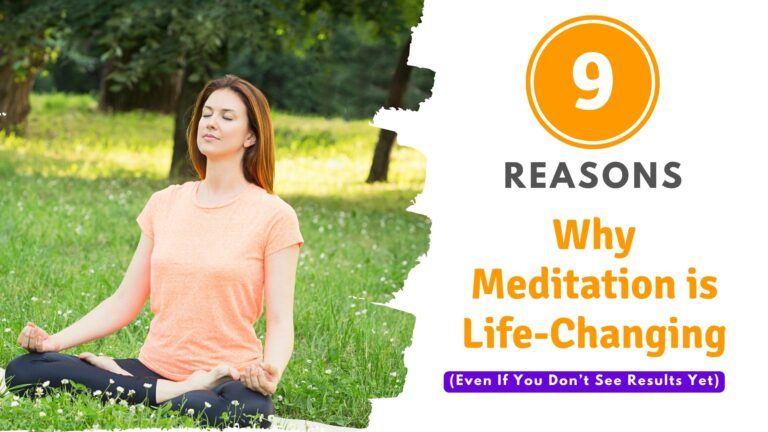
Why does meditation feel so powerful for some people, while others are left wondering if it’s working at all? The truth is, the benefits of meditation often unfold quietly beneath the surface and over time. In this post, we’ll explore why meditation can be life-changing, even if you don’t notice immediate shifts.
You’ll discover nine deeply impactful ways it transforms your mind, body, and emotions, helping you stay consistent with your practice, even during the moments when progress feels invisible.
1. Meditation Teaches You to Pause Before You React
When something upsets you, do you often react without thinking, then regret it later? Meditation helps change that.
One of the most powerful benefits of meditation is that it trains you to pause before reacting. Instead of being pulled by strong emotions or habits, you learn to respond with more awareness and calm.
Here’s how this works in daily life:
- You stop living on autopilot. Most of us move through the day reacting to stress, noise, or people without thinking. Meditation helps you notice what’s happening inside you, so you don’t act out of habit. You become more mindful of your thoughts and actions.
- You create a gap between trigger and response. Let’s say someone says something rude. Before meditation, you might snap back instantly. But with practice, you develop a small space between what happens and how you respond. In that space, you can choose calm over conflict.
- You handle emotions more wisely. Whether it’s anger, anxiety, or frustration, meditation teaches you to observe your emotions instead of being controlled by them. You begin to see emotions like waves, they rise and fall, but they don’t have to knock you over.
- You improve relationships. This pause gives you a better chance to listen, speak kindly, or simply walk away from unnecessary arguments. Over time, this leads to more peaceful interactions with others and with yourself.
Even if you don’t feel this change right away, the ability to pause and respond with intention is one of the first signs that meditation is quietly working. It’s not always dramatic, but it’s deeply life-changing.
2. It Builds Inner Stability, Even in Chaos
Life is full of ups and downs. Meditation doesn’t stop the chaos around you but it helps you stay steady inside, no matter what’s going on.
Here’s how meditation creates this inner stability:
- You respond more calmly to stress.
Even when your mind feels busy or your day is overwhelming, regular meditation helps your nervous system settle. Over time, you may notice that things that once made you anxious don’t shake you as much. You still feel stress but you don’t spiral the way you used to. - You become less reactive to challenges.
When problems come up, like a tough conversation, a delay, or unexpected news meditation helps you stay grounded. Instead of reacting with panic or frustration, you’re more able to pause, take a breath, and deal with things calmly. - You build emotional strength.
Inner stability doesn’t mean you stop feeling emotions. It means you can feel sadness, fear, or anger without being overwhelmed. You learn to hold space for your feelings instead of getting stuck in them. This makes you stronger inside, even when life is messy outside. - You carry a sense of peace with you.
Over time, meditation creates a quiet strength. You might still face chaos at work, in relationships, or in daily life, but something inside you stays steady. You begin to carry peace within you, rather than searching for it in your surroundings.
Even if you don’t see these changes right away, know that every time you sit and breathe with awareness, you’re training your mind to stay centered. And that quiet strength can become your greatest support when life gets hard.
3. Meditation Rewires Your Brain (Literally)
You may not feel it happening but every time you meditate, your brain is changing in powerful ways. Modern science shows that meditation doesn’t just calm the mind, it also reshapes how the brain works and functions.
Here’s how meditation rewires your brain for the better:
- It strengthens areas linked to focus and emotional control.
Regular meditation increases the thickness of the prefrontal cortex, the part of your brain that helps with decision-making, focus, and self-control. This means you become better at paying attention and managing your emotions, even in stressful situations. - It quiets the overthinking part of your brain.
The “default mode network” is a part of your brain that becomes active when your mind wanders often leading to worry, self-judgment, or replaying the past. Meditation helps slow this mental chatter, so you can be more present and less caught in overthinking. - It reduces the brain’s stress response.
Meditation lowers activity in the amygdala, the part of the brain that handles fear and stress. As this area becomes less reactive, you’re less likely to be overwhelmed by anxiety or fear. Over time, your brain learns to stay calm, even during pressure. - It builds long-term resilience.
These brain changes don’t happen overnight, but they build up over time, just like going to the gym strengthens your body. Even if you don’t notice immediate results, your brain is learning to function in a healthier, more balanced way with every session.
So if you’ve been wondering whether meditation is doing anything, remember this: your brain is growing, shifting, and healing behind the scenes. It’s one of the most powerful and lasting gifts you can give yourself.
Train your mind to pause, find peace in the storm, and reshape your patterns. Here are some programs that will support your growth from reactive to resilient.


4. It Deepens Your Self-Awareness
One of the quiet but powerful effects of meditation is that it helps you get to know yourself better, your thoughts, your habits, and even your hidden emotions.
Let’s break down how this actually works:
- You start to notice your thought patterns.
Most of us have thoughts running all day long without realizing it. Meditation gives you a front-row seat to what’s going on in your mind. You begin to notice certain patterns, like self-criticism, worry, or comparing yourself to others. Once you notice these patterns, you’re no longer trapped by them. - You become more aware of your emotional triggers.
Have you ever reacted strongly to something and later wondered why? Meditation helps you slow down and recognize what triggers your emotions. This awareness gives you the power to respond more wisely instead of reacting out of habit. - You understand your inner world with more kindness.
Self-awareness isn’t just about noticing your flaws, it’s also about understanding yourself with compassion. As you observe your thoughts and feelings without judgment, you start treating yourself more gently. This soft awareness can lead to real healing. - You catch yourself before falling into old habits.
Maybe you tend to avoid things when you feel stressed, or you shut down during conflict. With regular meditation, you begin to notice these habits sooner. That gives you a chance to pause and choose a better way, before falling into the same cycle.
The more you practice, the more clear and connected you become, not only to what you think and feel, but also to who you really are beneath the noise. And that kind of self-understanding is life-changing.
5. Meditation Improves Focus & Mental Clarity
In today’s world, it’s easy to feel distracted, scattered, or mentally foggy. Meditation helps train your mind to focus better and think more clearly.
Here’s how regular meditation supports mental clarity and sharper focus:
- It strengthens your ability to concentrate.
When you meditate, especially with a focus on your breath or a sound, you’re practicing bringing your attention back again and again. This simple act improves your concentration over time. Just like lifting weights builds physical strength, returning your attention builds mental strength. - It reduces mental clutter.
We often carry too many thoughts at once, worries, to-do lists, conversations, regrets. Meditation helps you slow things down. With regular practice, the mind becomes less noisy and more organized. You start to think more clearly because you’re not trying to process everything at once. - It helps you stay present with what matters.
Instead of jumping from one task to another or constantly checking your phone, meditation trains your mind to stay with the present moment. This makes everyday activities like working, listening, or learning more focused and effective. - It refreshes your mind like rest.
Even a few minutes of stillness can give your brain a break. Many people report feeling clearer and more energized after meditating. It’s like hitting the reset button, especially during a busy or overwhelming day. - It improves decision-making.
With more clarity and less stress clouding your mind, you’re better able to make thoughtful choices. You become less reactive and more thoughtful whether you’re making small decisions or big life ones.
You may not notice these benefits all at once, but every session adds up. Over time, your mind becomes less distracted, more focused, and better able to handle whatever comes your way.
6. It Helps You Feel More at Home in Your Body
Many people spend most of their time “living in their head” lost in thoughts, worries, or plans. Meditation gently brings you back into your body, helping you feel more grounded, present, and safe within yourself.
Here’s how this happens:
- You learn to reconnect with physical sensations.
During meditation, you often focus on the breath or do a body scan. These practices help you notice how your body feels, tight shoulders, a clenched jaw, or a calm belly. You become more aware of physical sensations that you usually ignore. This helps you build a stronger connection to your body, one moment at a time. - You become more present in your daily life.
When you’re more in touch with your body, you’re more present. You notice how your feet feel on the ground as you walk. You become aware of how food tastes when you eat. These small moments of presence help shift your attention away from racing thoughts and into the here and now. - You reduce tension and stored stress.
The body holds stress even when your mind is trying to move on. Meditation helps you gently tune in and release areas of tightness. Simply noticing tension can be the first step to letting it go. Over time, your body feels lighter, more relaxed, and more open. - You feel safer within yourself.
For some people, especially those who’ve experienced stress or trauma, being in the body can feel uncomfortable. Meditation offers a slow and gentle way to return to the body with kindness. You don’t have to force anything, you just begin by noticing, accepting, and allowing. This can help you feel more at home in your own skin. - You build trust in your inner signals.
By paying attention to how your body feels, you start to listen to what it’s telling you, when it needs rest, movement, or stillness. This creates a healthy relationship between your body and mind, one based on respect and care.
Even if you start with just a few minutes a day, this shift from “thinking” to “feeling” can create deep healing. The more you practice, the more you begin to live in your body not just in your head.
Imagine moving through life with mental clarity, deep self-awareness and fully present in your body and mind. Here are some powerful programs to help you cultivate awareness, clarity, and connection to your body.


7. It Grows Compassion – For Yourself & Others
One of the quietest yet most beautiful effects of meditation is how it opens your heart. You start treating yourself and the people around you with more kindness, patience, and understanding.
Here’s how meditation helps grow compassion:
- You begin to notice your inner critic.
Many of us speak to ourselves in ways we’d never speak to a friend. Through meditation, you become more aware of harsh thoughts like “I’m not good enough” or “I always mess things up.” By simply noticing these thoughts without judgment, you create space for softer, more encouraging self-talk. Over time, you start to treat yourself with more care. - You learn to hold your struggles with gentleness.
Instead of pushing away your pain or pretending everything is fine, meditation helps you sit with what you’re feeling, whether it’s sadness, guilt, or fear. This teaches you to be kind to yourself, even when things are hard. That’s real compassion: staying with yourself during difficult moments instead of turning away. - You become more patient with others.
As you become more understanding of your own struggles, it becomes easier to understand others. You realize everyone has their own story, their own pain, and their own reasons for acting the way they do. This insight naturally leads to more patience, less judgment, and deeper connection in your relationships. - You respond with kindness instead of reacting with anger.
When someone upsets you, you may still feel hurt but meditation gives you the tools to respond with more calm and care. You might pause before saying something you don’t mean. You might choose to listen instead of argue. These small changes can bring more peace into your everyday life. - You feel more connected to people around you.
Practices like loving-kindness meditation (also called “Metta”) help you send goodwill to yourself and others. You may begin by saying, “May I be happy. May I be safe,” and then extend those same wishes to loved ones and even to people you struggle with. This practice reminds you that we’re all human, all trying, and all worthy of kindness.
You don’t have to force compassion. It grows naturally through awareness, patience, and practice. And even if you don’t feel a huge shift right away, these gentle changes can improve how you treat yourself and how you show up in the world.
8. Meditation Strengthens Your Emotional Resilience
Life brings challenges, stress, and strong emotions but meditation helps you stay steady through it all. It doesn’t make emotions go away, but it teaches you how to face them without being overwhelmed.
Here’s how meditation builds emotional resilience:
- You learn to sit with difficult feelings.
Meditation teaches you how to stay present with what you’re feeling, whether it’s sadness, fear, anger, or confusion. Instead of pushing the feeling away or reacting quickly, you practice noticing it with calm awareness. Over time, this helps you face hard emotions without running from them. - You stop being ruled by your emotions.
Sometimes, emotions take over and lead to actions we regret, like yelling, withdrawing, or worrying nonstop. Meditation helps you create space between feeling and reacting. You start to notice: “I’m feeling angry,” instead of just being angry. That awareness gives you more control over what you choose to do next. - You bounce back from stress more easily.
Everyone feels stress, but not everyone handles it the same way. With regular meditation, your nervous system becomes more balanced. When something stressful happens, you may still feel it but you recover more quickly. You don’t stay stuck in stress for as long as you used to. - You grow more confident in handling life’s ups and downs.
The more you practice staying calm during tough moments, the more trust you build in yourself. You start to feel, “I can handle this,” even when things are messy. That quiet inner strength is what resilience looks like not avoiding pain, but facing it with steadiness and care. - You gain a sense of emotional safety within yourself.
As you get used to sitting with emotions without judgment, you begin to feel safer inside your own mind. You realize that emotions come and go, they don’t last forever, and they don’t define who you are. This understanding brings deep emotional stability.
Even if the change feels small at first, each time you meditate, you’re training your emotional muscles. Just like the body gets stronger with exercise, your ability to stay calm, steady, and kind during tough times grows stronger too.
9. It Connects You to a Sense of Purpose & Presence
Meditation isn’t just about relaxing, it can help you feel more alive, more present, and more connected to what really matters.
Let’s explore how:
- You become more present in the moment.
Meditation teaches you how to be here, fully here. Instead of always thinking about the past or worrying about the future, you start to notice what’s happening now. This simple shift changes everything. Meals taste better. Conversations become deeper. You start to experience life, not just rush through it. - You feel more connected to your values.
As your mind becomes quieter, you begin to notice what truly matters to you. You might realize you want to live with more kindness, honesty, or courage. Meditation helps you see beyond distractions and connect to your deeper values. It becomes easier to live in a way that feels true to you. - You stop chasing things that don’t fulfill you.
When you’re constantly busy or stressed, it’s easy to chase after things, more money, more approval, more success, hoping they’ll make you happy. But meditation helps you slow down and ask, “Is this really what I want?” That question can guide you toward a more meaningful life, instead of an endless race. - You find a deeper sense of peace and direction.
Even if you don’t have all the answers, meditation can create a feeling of inner guidance. You start to trust your own path. You don’t need everything to be perfect to feel okay. You just need to be present, aware, and connected to your heart. - You live more intentionally.
Instead of reacting to life, you begin to respond with purpose. You choose how you spend your time, how you treat others, and how you take care of yourself. This kind of living awake and intentional is what gives life deeper meaning.
You may not feel all of this right away, but meditation gently points you back to what’s real, important, and worth your attention. Over time, you not only feel more peaceful, you feel more you.
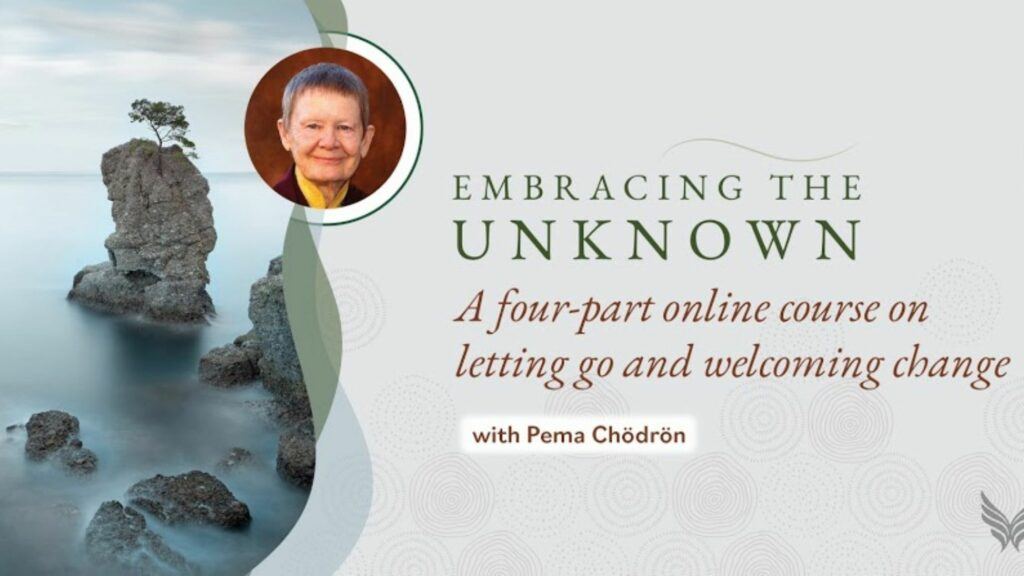
Life feels different when you’re rooted in purpose, emotionally steady, and kind to yourself. These programs are designed to help you cultivate those life-changing qualities from within.

Final Thoughts
Even if you haven’t seen dramatic results from meditation yet, trust that something meaningful is already shifting inside you. These changes often begin quietly, like learning to pause before reacting, feeling more grounded during stress, or becoming just a little kinder to yourself. Over time, these small shifts grow into lasting transformation.
The truth is, why meditation works isn’t always obvious at first. But the more you show up for yourself, day by day, breath by breath, the more life-changing it becomes. So keep going. Be patient. And remember: just by practicing, you’re already doing the most important part.
