
I used to think mindfulness after a stressful day meant sitting quietly and trying to “clear my mind.” But most days, that just made things worse. My thoughts were still racing, my body felt tight, and I couldn’t relax no matter how hard I tried. Over time, I realized the problem wasn’t mindfulness itself, it was using the wrong approach for how I actually felt.
In this article, I’ll show you a different way to approach mindfulness after a stressful day. Instead of giving you generic techniques, I’ll help you match the right practice to how you’re feeling, whether your mind is racing, your body is tense, or you just feel drained. You’ll also learn a simple reset routine you can use anytime you don’t know where to start.
Why Mindfulness Often Fails After a Stressful Day
After a stressful day, mindfulness often fails because people choose the wrong technique for their state. A racing mind, tense body, or emotional exhaustion each need a different approach. Forcing yourself to “calm down” without addressing your actual state can make mindfulness feel frustrating instead of helpful.
I’ve been there, coming home after a long, exhausting day, sitting down to meditate, and thinking, “Okay, this should calm me down.”
But instead?
My mind got louder. My body felt more uncomfortable. And within a few minutes, I just gave up.
For a long time, I thought I was doing something wrong.
The real issue (that no one talks about)
What I eventually realized is this:
I wasn’t failing at mindfulness. I was just using the wrong type of mindfulness for how I felt.
After a stressful day, your system isn’t in one single state. You might be:
- Mentally overloaded (thoughts won’t stop)
- Physically tense (tight shoulders, heavy body)
- Emotionally drained (low energy, no motivation)
- Restless (tired, but can’t sit still)
And here’s the problem…
Why the “just sit and breathe” advice doesn’t always work
Most advice online tells you to:
- Sit still
- Focus on your breath
- Clear your mind
That sounds simple, but it ignores what’s actually happening inside you.
- If your mind is racing, sitting quietly can feel unbearable
- If your body is tense, staying still can increase discomfort
- If you’re drained, you might not even have the energy to focus
I remember one evening in particular, I tried to sit and focus on my breath, but my legs felt restless and my thoughts kept jumping from one thing to another. The more I tried to “calm down,” the more frustrated I felt.
That’s when it clicked.
The mistake most people make
The mistake is forcing calm instead of working with your current state.
Mindfulness isn’t one fixed technique. It’s a set of tools.
And if you pick the wrong tool for the moment, it’s going to feel like:
- It’s not working
- It’s too hard
- Or worse… that mindfulness just isn’t for you
What actually works instead
What worked for me was much simpler:
Start by noticing how you feel, then choose a practice that matches it.
That one shift made mindfulness feel:
- Easier
- More natural
- And actually helpful after a stressful day
Identify Your Stress State First
Before practicing mindfulness, identify how you actually feel. Stress shows up in different ways, racing thoughts, physical tension, emotional exhaustion, or restlessness. Recognizing your current state helps you choose the right mindfulness practice, making it more effective and easier to follow.
For the longest time, I skipped this step completely.
I would feel stressed… and immediately jump into a technique.
No pause. No awareness. Just “I need to fix this.”
But here’s what I’ve learned the hard way:
If you don’t know what kind of stress you’re dealing with, you’ll keep choosing the wrong solution.
Stress doesn’t feel the same every day
Not all stressful days are equal. Sometimes it’s your mind. Sometimes it’s your body. Sometimes it’s just a strange mix of everything.
Here are the most common ways stress shows up:
- Racing mind → you keep replaying conversations or thinking ahead
- Tense body → tight shoulders, heavy chest, physical discomfort
- Emotionally drained → low energy, no motivation, just “done”
- Restless → tired, but you can’t sit still or relax
- Numb or disconnected → you don’t feel much… just blank
As you read this, you might notice:
“Yeah… today feels more like this one.”
That awareness alone is powerful.
A small pause that changes everything
Now, instead of jumping straight into a practice, try this:
Take 10–15 seconds and ask yourself:
- What feels strongest right now, my thoughts, my body, or my energy?
- Do I need to release, slow down, or just reconnect?
That’s it. Nothing complicated.
I remember one evening when I felt completely off. I assumed I needed to “calm my mind,” but when I paused, I realized my body was actually the problem, my shoulders were tight, and I felt physically heavy.
Once I noticed that, I stopped trying to meditate… and instead focused on releasing that tension.
It worked almost instantly.
Why this step matters so much
When you identify your stress state first:
- You stop guessing what to do
- You avoid frustration from “wrong” techniques
- You make mindfulness feel easier and more natural
It turns mindfulness from:
“Why isn’t this working?”
into:
“Okay, this is exactly what I need right now.”
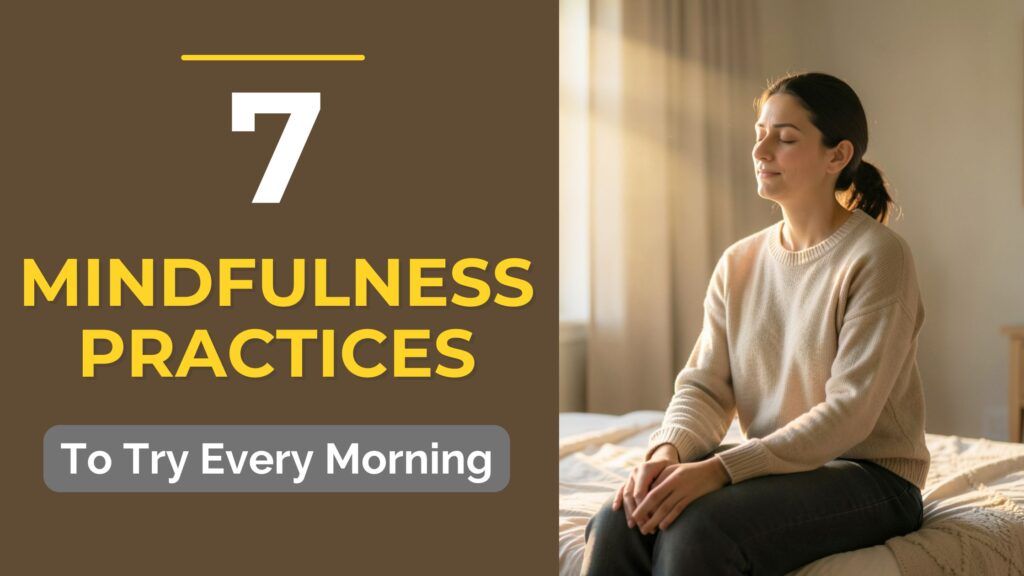
Ever have one of those days where your energy is low, your mind feels cluttered, or a tough conversation just won’t leave you alone? What if a few simple mindfulness shifts could completely change how you start your day, handle stress, and find your calm again, no matter what life throws at you? Dive in and discover how small, intentional moments can make a big difference.

7 Mindfulness Practices Based on How You Feel
The best mindfulness practice depends on your stress state. For a racing mind, focus on breathing. For a tense body, try physical release. If you feel drained, use gentle awareness. Matching the right technique to how you feel makes mindfulness more effective and easier to follow after a stressful day.
This is where everything started to click for me.
Instead of forcing one technique every day, I began asking:
“What do I actually need right now?”
And then I’d pick a practice based on that.
Here are the 7 that worked best for me, simple, practical, and easy to do even on tough days.
1. If your mind won’t stop racing → Try “Anchored Breathing”
What it feels like:
Your thoughts keep jumping. You replay conversations. You can’t switch off.
What to do (2–3 minutes):
- Sit comfortably
- Inhale for 4 seconds, exhale for 6 seconds
- Silently say: “in” and “out” with each breath
When to use it:
Right after work or when you notice mental overload
2. If your body feels tight and heavy → Try “Tension Release”
What it feels like:
Tight shoulders, stiff neck, physical heaviness
What to do (2–4 minutes):
- Gently tense your shoulders for 5 seconds
- Release slowly
- Repeat with different body parts
When to use it:
Before sitting down to relax or meditate
3. If you feel emotionally drained → Try “Do-Nothing Awareness”
What it feels like:
Low energy, no motivation, mentally exhausted
What to do (2–5 minutes):
- Sit or lie down
- Don’t focus on anything specific
- Just notice whatever comes up
When to use it:
When you don’t have the energy for structured practice
4. If you feel restless but tired → Try “Mindful Movement”
What it feels like:
You’re tired… but sitting still feels impossible
What to do (3–5 minutes):
- Walk slowly around your room
- Pay attention to each step
- Feel your feet touching the ground
When to use it:
Evening time when your body needs movement, not stillness
5. If you feel irritated or overwhelmed → Try “Labeling Thoughts”
What it feels like:
Frustration, irritation, emotional overload
What to do (2–3 minutes):
- Notice what’s coming up
- Silently label it: “thinking”, “frustration”, “worry”
- No need to fix anything
When to use it:
When emotions feel intense or hard to control
6. If you feel numb or disconnected → Try “5-4-3-2-1 Grounding”
What it feels like:
Blank, disconnected, not fully present
What to do (2–3 minutes):
- 5 things you see
- 4 things you feel
- 3 things you hear
- 2 things you smell
- 1 thing you taste
When to use it:
When you feel mentally “checked out”
7. If you just want a quick reset → Try “3-Minute Breathing Space”
What it feels like:
You don’t know what you need, you just want relief
What to do (3 minutes):
- Notice how you feel
- Focus on your breath
- Expand awareness to your whole body
When to use it:
Anytime you feel overwhelmed or unsure
A quick note from my experience
I used to try the same technique every day and wondered why it only worked sometimes.
But once I started matching the practice to how I felt, things changed.
Some days I needed movement. Some days I just needed to sit and do nothing.
That flexibility made mindfulness feel real, not like something I had to force.
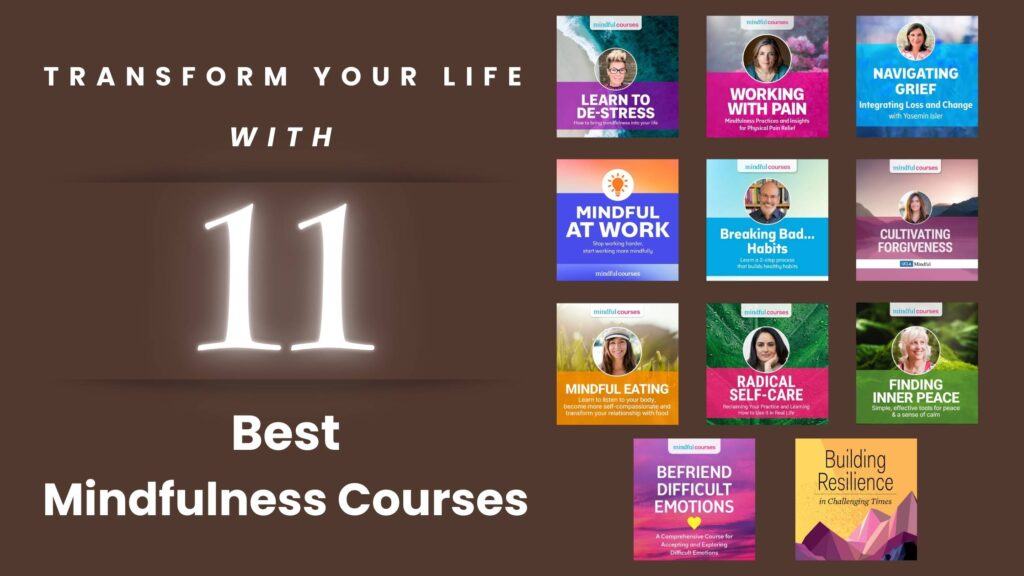
What if the right meditation course could actually help you feel lighter, calmer, and more in control, no matter whether you’re dealing with everyday stress, deeper emotional wounds, or constant anxiety? Curious which ones truly make a difference and why? Take a moment to explore and find the path that might just change how you feel, starting today.
When to Use Each Practice (This Changes Everything)
Timing plays a key role in mindfulness. Some practices work better right after work, while others are ideal before bed. Keeping sessions short and choosing one technique at a time prevents overwhelm. Using the right practice at the right moment makes it easier to reset after a stressful day.
This is something I completely overlooked in the beginning.
I thought mindfulness was just about what you do.
But I’ve learned it’s just as much about when you do it.
The same practice can feel:
- Really helpful at one time
- And completely useless at another
Right after a stressful moment → Release first, then slow down
If you’ve just finished work or had a tough interaction, your system is still “activated.”
This is not the best time to:
- Sit still
- Close your eyes
- Try to relax instantly
I’ve tried this many times, and it usually backfires.
What works better:
- Start with Tension Release or Mindful Movement
- Then move into breathing or awareness
Think of it as:
Release → then relax
In the evening → Choose something gentle
By the time evening comes, your energy is different.
You’re not as activated, but you might feel:
- Drained
- Mentally foggy
- Low on energy
This is where I used to push myself to “do proper meditation.”
But honestly, that just felt like effort.
What works better:
- Do-Nothing Awareness
- 3-Minute Breathing Space
Simple. Low effort. Still effective.
Before bed → Avoid anything too active
This was a mistake I didn’t expect.
I once tried mindful walking right before bed thinking it would relax me…
but it actually made me feel more awake.
Before sleep, stick to:
- Slow breathing
- Gentle awareness
- Body-based relaxation
Keep it calm and minimal.
Keep it short (this matters more than you think)
After a stressful day, you don’t need a 20-minute session.
In fact, long sessions can feel overwhelming.
What worked better for me was:
- 2 to 5 minutes
- One practice at a time
That’s it.
And surprisingly, that was enough to feel a shift.
Don’t stack too many techniques
Another mistake I used to make:
I’d try:
- Breathing
- Then body scan
- Then observing thoughts
All in one go.
It felt productive, but it was actually exhausting.
Now I keep it simple:
One state → one practice → done
What changed for me
Once I started paying attention to timing, mindfulness became much easier to stick with.
I wasn’t forcing it anymore.
I was just choosing the right moment and the right tool.
Final Thoughts
After a stressful day, it’s easy to think you need the “perfect” mindfulness routine to feel better. I used to think the same way. But what actually made a difference was keeping it simple and choosing what matched how I felt in that moment.
You don’t need to try all seven practices. Just pick one that fits your current state and give it a few minutes. That’s usually enough to create a small shift and sometimes, that’s all you need to reset.
Thinking about starting meditation or taking it to the next level, but not sure which course is actually worth your time? Whether you want to build focus, grow confidence, explore spirituality, or simply feel more like yourself again, the right guidance can make all the difference. Curious which courses truly stand out for every level and goal? Dive in and discover the ones that could transform not just your practice, but your everyday life.