
Some days, I don’t feel anxious or stressed, I just feel flat. Low energy, heavy body, foggy mind. On days like these, even gentle meditation can feel like too much effort. Over time, I’ve learned that mindfulness on low energy days needs a very different approach. Not something that asks me to focus harder, sit longer, or “push through” but something that actually respects where my energy is.
In this post, I’m sharing seven mindfulness practices I personally come back to on low-energy days. These aren’t about discipline or consistency. They’re simple, low-effort ways of staying present without draining yourself further. If you’re tired, unmotivated, or just don’t have much to give today, these practices are meant to meet you exactly where you are.
Practice #1: The Permission Pause (Doing Nothing on Purpose)
Practice #1: The Permission Pause (Doing Nothing on Purpose)
On low-energy days, the first thing I notice isn’t always physical tiredness. It’s the pressure I put on myself to do something about it. I should meditate. I should feel better. I should at least try. And that quiet internal push often drains me more than the low energy itself.
That’s why this practice comes first for me.
I call it the Permission Pause, and it’s exactly what it sounds like: a short pause where I give myself permission to stop trying altogether.
This isn’t meditation in the traditional sense. There’s no posture to fix, no breath to control, and no mindset to reach. The intention is very simple, for a brief moment, nothing needs to change.
How I practice it
When I notice I’m running on low energy, I pause for about 30 seconds to a minute.
I sit or lie down however my body naturally wants to be slouched, reclined, or completely still. I don’t correct anything. Then, silently, I tell myself:
“For the next minute, I don’t need to fix this.”
That’s it.
I don’t watch my thoughts. I don’t focus on my breath. If my mind wanders, that’s fine. If my body feels heavy, that’s fine too. The pause ends when it ends, no timer, no structure.
Why this helps on low-energy days
What I’ve learned is that low energy often gets worse when I resist it. When I keep trying to override how I feel, I create tension on top of exhaustion.
This pause removes that resistance.
By doing nothing on purpose, I stop adding pressure to an already depleted system. My nervous system gets a brief signal that it’s safe to rest, even if nothing else changes afterward.
And interestingly, that alone often creates a small shift. Not a burst of energy, but a sense of less friction. The day feels slightly easier to move through.
When I use this practice
- When meditation feels like too much effort
- When I feel guilty for being unproductive
- When my mind is tired but still pushing
- As a reset before deciding what (if anything) to do next
I don’t use this practice to feel better. I use it to stop making things harder.
If all you do today is take one Permission Pause, that’s already enough mindfulness for a low-energy day.
Practice #2: Body Noticing Without Scanning
On low-energy days, I don’t have the capacity for a full body scan. Trying to move my attention from head to toe feels like a task, something I have to remember, manage, and complete. And when my energy is low, even that kind of gentle structure can feel like too much.
So instead of scanning my body, I do something much simpler. I let my body tell me what’s already asking for attention.
This practice is about noticing one sensation, not the whole body.
How I practice it
I sit or lie down comfortably and ask myself a single question:
“What feels most noticeable in my body right now?”
I don’t go looking for sensations. I wait for one to stand out on its own. It might be heaviness in my chest, tightness in my shoulders, warmth in my hands, or even a sense of numbness.
Once something shows up, I stay with just that sensation.
I don’t label it as good or bad. I don’t try to relax it. I simply notice it for a few breaths — usually no more than five or ten.
If my attention drifts, I gently come back. And if it doesn’t, I let the practice end there.
Why this helps on low-energy days
When energy is low, mental bandwidth is limited. Asking the mind to track multiple sensations can quickly lead to fatigue or frustration.
This approach reduces the effort to almost nothing.
By focusing on what’s already loud in the body, I’m not forcing awareness, I’m following it. That makes the practice feel natural instead of draining.
It also helps me stay present without disconnecting from my body, which is something that often happens when I’m exhausted.
When I use this practice
- When a full body scan feels overwhelming
- When I feel physically heavy or foggy
- When sitting meditation feels dull or effortful
- When I want to reconnect with my body without “doing” too much
Some days, I notice only one sensation and then stop. Other days, that single moment of awareness is enough to ground me gently.
I don’t aim for insight or release here. I aim for simple contact , noticing what’s already there, without asking anything more of myself.
Let me guess…you know meditation helps…
but sometimes you just don’t feel like doing it.
Especially when you’re emotionally drained. Or stressed before a big meeting. Or just “not in the mood.” I’ve written about exactly these moments, with practical ways to respond instead of forcing yourself. If this sounds like you, these might be worth a quick read.

Practice #3: Micro-Breath Awareness (Without Changing the Breath)
On low-energy days, I’m very careful about how I work with the breath. Traditional breathing techniques; slowing it down, deepening it, counting it, can feel surprisingly effortful when I’m already tired. Sometimes they even make me more aware of how little energy I have.
So on days like this, I don’t try to breathe better. I just notice a few breaths exactly as they are.
This practice is intentionally small. Almost minimal.
How I practice it
I don’t sit up straight or adjust my posture. I stay exactly as I am.
Then I bring my attention to just three to five natural breaths.
- I don’t deepen them.
- I don’t slow them down.
- I don’t guide them in any way.
I simply notice where the breath shows up most clearly right now, maybe at the nose, the chest, the belly, or even just the subtle movement of the body.
If my mind wanders in between breaths, I don’t pull it back aggressively. I just catch the next breath when I can.
Once I’ve noticed a few breaths, I stop. I don’t extend the practice just to feel like I’ve “done enough.”
Why this helps on low-energy days
What I’ve found is that trying to control the breath requires energy I may not have. But noticing the breath takes very little.
This practice creates a brief moment of presence without triggering effort, self-correction, or judgment. It’s mindfulness without performance.
It also helps me stay connected to my body without pushing for calm or clarity, both of which can feel unrealistic on low-energy days.
When I use this practice
- When my mind feels foggy or scattered
- When breathwork feels like too much effort
- When I want something grounding but very short
- When I need a pause without committing to meditation
Some days, those few breaths are all I do. And that’s enough.
On low-energy days, I’ve learned that mindfulness doesn’t need to be deep or sustained. Sometimes, it just needs to be honest.
Practice #4: An Energy-Based Check-In (Not an Emotional One)
When my energy is low, I often don’t have the clarity to name what I’m feeling emotionally. If I ask myself, “How am I feeling?” my mind either goes blank or gets overwhelmed trying to figure it out.
So on low-energy days, I don’t start with emotions at all. I start with energy.
This small shift has made mindfulness feel much more accessible when I’m tired.
How I practice it
I pause for a moment and ask myself a very simple question:
“What does my energy feel like right now?”
I don’t analyze it. I just notice the quality.
- Sometimes my energy feels heavy or dull.
- Sometimes it feels flat, scattered, or thin.
- Sometimes it feels more physical than mental or the other way around.
If a word comes, I let it come. If it doesn’t, I just notice the general sense of it.
I don’t try to improve it or explain it. I don’t connect it to productivity, mood, or meaning. I just acknowledge what’s there and move on.
The whole check-in usually takes less than a minute.
Why this helps on low-energy days
Emotional awareness can be surprisingly demanding. It requires reflection, language, and mental clarity, all of which can feel limited when energy is low.
An energy-based check-in is simpler and more honest.
It helps me stay present without forcing insight. It also removes the pressure to “understand” myself when I don’t have the capacity to do so.
Often, just naming the energy I’m in creates a small sense of steadiness. Not because anything changes, but because I stop fighting it.
When I use this practice
- When emotional check-ins feel confusing or draining
- When journaling feels like too much
- When I want awareness without introspection
- When I feel disconnected but don’t know why
This practice reminds me that mindfulness doesn’t always have to be deep or emotional. On low-energy days, simple acknowledgment can be more supportive than insight.
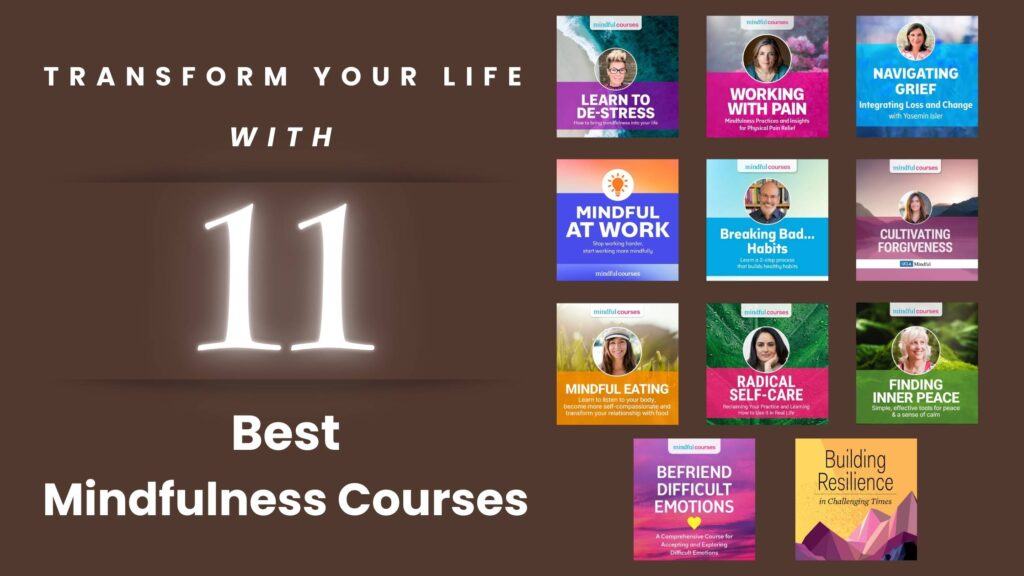
What if the right meditation course could completely change how you handle stress or anxiety? Instead of guessing your way through random practices, I’ve gathered powerful courses focused on stress relief, trauma healing, and anxiety, each designed to guide you step by step. If you’re ready for something more structured and supportive, you might want to explore these.
Practice #5: Mindful Resting (Letting Rest Be the Practice)
On low-energy days, I used to think rest was something I did instead of mindfulness. If I was lying down or doing nothing, I assumed I wasn’t really practicing.
Over time, that idea stopped making sense to me.
On days when my energy is low, rest is often the most honest form of mindfulness I have access to. So instead of trying to meditate and then rest, I let resting itself become the practice.
How I practice it
I lie down or recline, however my body naturally settles. I don’t set a timer or aim for a certain state. I don’t even decide how long I’ll stay there.
I let my eyes close if they want to. Then I bring my attention to something very simple:
- the weight of my body against the bed or chair
- the places where my body feels supported
- the contact between my back, legs, or head and the surface beneath me
Sometimes I place one hand on my chest or belly, not to control the breath, but just to feel the warmth and contact.
If my mind wanders, that’s fine. If I drift in and out of awareness, that’s fine too. I’m not trying to stay alert or focused. I’m just staying lightly aware that I’m resting.
Why this helps on low-energy days
When energy is low, effort is expensive. Traditional mindfulness can quietly turn into another task, something to do well.
Mindful resting removes that pressure.
It allows my nervous system to settle without asking my mind to work. There’s no posture to maintain, no awareness to hold tightly. The body gets to rest, and awareness follows gently, if and when it wants to.
This practice helps me stop treating rest as something separate from mindfulness or worse, something I have to earn.
When I use this practice
- When sitting meditation feels unrealistic
- When my body feels heavy or depleted
- When I need rest but don’t want to disconnect completely
- When I’m tempted to scroll just to escape how tired I feel
Some days, this turns into a short nap. Other days, it’s just a few minutes of lying down with awareness. Either way, I don’t see it as a failure or a shortcut.
On low-energy days, letting rest be enough is often the most supportive practice of all.
Practice #6: Single-Task Mindfulness for Low-Energy Moments
On low-energy days, the idea of “setting aside time” for mindfulness can feel unrealistic. Even a short sit can feel like a commitment I don’t have the energy to make.
So instead of adding something new, I bring mindfulness into something I’m already doing.
This practice is about single-task awareness, giving gentle attention to one simple action, and nothing more.
How I practice it
I choose an activity that’s already part of my day and requires very little effort. Something small and ordinary.
It might be:
- drinking a glass of water
- washing my hands
- standing near a window
- stretching for a few seconds
- making tea
While I’m doing it, I bring my attention to the physical sensations involved.
- I notice the temperature of the water.
- The feeling of my feet on the floor.
- The movement of my hands.
- The weight of the cup.
I don’t narrate the experience or try to stay focused for long. I just stay with the sensations for as long as it feels natural and when my attention drifts, the practice ends.
Why this helps on low-energy days
This works because it doesn’t ask for extra energy.
I’m not carving out time. I’m not changing my routine. I’m just bringing awareness to something that’s already happening.
On low-energy days, my capacity for sustained attention is limited. This practice respects that. It keeps mindfulness brief, grounded, and woven into real life instead of set apart from it.
It also helps me feel present without needing to sit still or close my eyes, which can sometimes make fatigue feel heavier.
When I use this practice
- When sitting meditation feels like too much
- When I’m moving slowly through the day
- When my mind feels scattered or dull
- When I want mindfulness to feel practical, not formal
Some days, this might be the only mindfulness I practice and that’s okay. Presence doesn’t have to last long to be meaningful.
On low-energy days, I focus less on how much mindfulness I’m doing, and more on keeping it simple enough that I’ll actually do it.
Practice #7: Ending the Day with “Enough-ness” Awareness
Low-energy days used to end the same way for me, with a quiet sense of guilt. I’d replay everything I didn’t do, all the ways I felt behind, and how tomorrow would have to be better to make up for it.
That mental review was often more exhausting than the day itself.
So I started ending low-energy days with a different kind of mindfulness, one that focuses on enough-ness rather than effort.
How I practice it
At the end of the day, usually while lying in bed or sitting quietly, I ask myself just one question:
“What was enough today?”
- Not what went well.
- Not what I’m grateful for.
- Just what was enough.
It might be:
- resting when my body needed it
- getting through the day without pushing
- doing one small necessary thing
- showing up in whatever limited way I could
If nothing specific comes to mind, I let “getting through the day” be enough.
I don’t turn this into a list or a reflection exercise. One answer is enough. Sometimes even acknowledging that the day was hard is enough.
Why this helps on low-energy days
Low-energy days often carry an invisible emotional weight. Even when nothing goes wrong, there’s a sense of falling short.
This practice helps me interrupt that pattern.
By naming what was enough, I stop measuring the day by productivity or output. I let the nervous system register that it’s okay to rest and that nothing needs to be earned before sleep.
It also helps me carry less mental residue into the next day.
When I use this practice
- When I feel guilty about resting
- When my energy never really returned
- When I’m tempted to mentally redo the day
- When I want to end the day gently, not critically
This practice doesn’t try to reframe the day as positive. It simply allows it to be complete.
On low-energy days, that sense of completion can be deeply grounding and sometimes, that’s the most supportive form of mindfulness there is.
A gentle reminder for low-energy days
If there’s one thing I hope this post leaves you with, it’s this: low-energy days don’t need to be fixed or optimized. They just need a different kind of care.
I don’t use these practices to feel better quickly or to turn a hard day around. I use them to stop adding pressure when my energy is already low. Some days, I come back to just one of these practices. Other days, I don’t practice at all, and that’s okay too.
Mindfulness on low energy days isn’t about consistency or discipline. It’s about listening, easing off, and allowing the day to be what it is. Even a few moments of awareness, done gently, can be enough.
If today is one of those days, I hope you take what feels supportive and leave the rest. You’re not falling behind. You’re responding wisely to where you are.
What if improving your focus and productivity wasn’t about doing more, but training your mind differently? From beginner-friendly meditation courses to deeper mindfulness programs designed to transform your life, I’ve gathered options for every stage of the journey. If you’ve been meaning to “get serious” about mindfulness, this might be your sign.