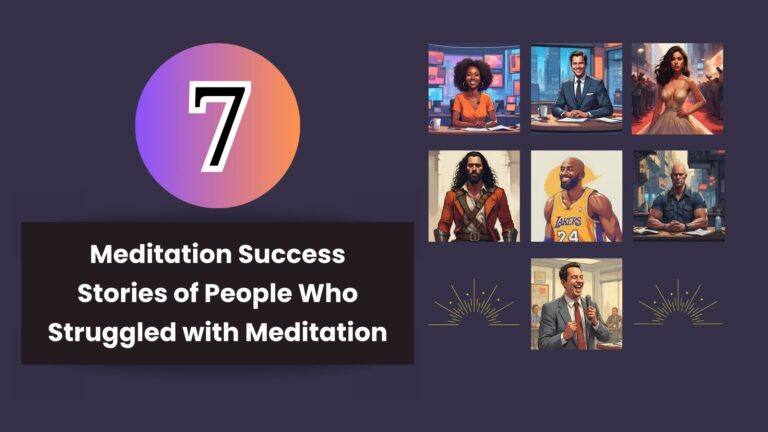
Why does meditation feel so hard, even when you know it’s supposed to help? If you’ve ever sat in silence, only to find your mind racing or your body restless, you’re not alone. Many people struggle when they first start meditating. That’s why reading real-life meditation success stories can be so inspiring.
In this post, you’ll discover seven powerful stories of well-known individuals who faced their own challenges with meditation and found a way through. Their journeys reveal that with patience, the right approach, and consistency, meditation can truly become a life-changing habit.
Story #1: Dan Harris – From Panic Attack to Mindful Anchor
Dan Harris didn’t set out to become a voice for meditation. In fact, his journey began with a very public breakdown and deep skepticism about mindfulness.
What Happened
Dan was a successful news anchor for ABC News when he had a panic attack live on Good Morning America in 2004. That moment, seen by millions, made him realize he needed to take his mental health more seriously.
“The voice in your head, that nonstop conversation, is not always helpful. Meditation helps you step out of that chatter and see things more clearly.”
→ Dan Harris, ABC News
→ Source
Initial Struggles with Meditation
- Dan dismissed meditation as “fluffy” and unscientific.
- He didn’t believe it could help with anxiety or stress.
- Sitting still felt unnatural in his fast-paced life.
Turning Point
After talking with mental health professionals and spiritual teachers, Dan was introduced to mindfulness meditation, a practice of paying attention to the present moment without judgment.
He began with:
- Just a few minutes a day
- Focusing on his breath and thoughts
- Practicing consistency over perfection
The Results
- He felt calmer and less reactive to stress.
- Became more aware of his emotions and thought patterns.
- Improved his performance both personally and professionally.
Where He Is Now
Dan wrote the bestselling book 10% Happier, which tells his story with honesty and humor.
He also launched:
- The 10% Happier app, offers guided meditations. This app was later rebranded as “Happier”.
- A popular podcast where he interviews meditation teachers, scientists, and thought leaders
What You Can Learn from Dan
- You don’t have to believe in meditation for it to work, just try it.
- It’s okay to start small. Even a few minutes a day makes a difference.
- Doubt and discomfort are part of the process and part of the growth.
Story #2: Oprah Winfrey – Finding Stillness in a Chaotic World
Even one of the most successful women in the world struggled to slow down. For Oprah Winfrey, meditation became a way to manage the constant noise of life and reconnect with herself.
What Happened
As a talk show host, entrepreneur, and media icon, Oprah was always busy, juggling interviews, productions, and leadership roles. Despite her achievements, she often felt emotionally drained and spiritually disconnected.
She knew something was missing, a way to feel centered amid the chaos.
Initial Struggles with Meditation
- Oprah found it difficult to sit still and quiet her thoughts.
- She thought meditation was something that only monks or spiritual experts did.
- She doubted whether she was “doing it right” a common fear among beginners.
Turning Point
Oprah was introduced to Transcendental Meditation (TM), a simple technique where you silently repeat a mantra for 20 minutes, twice a day.
To deepen her practice, she invited TM teachers to train her staff at OWN (Oprah Winfrey Network). This not only helped her personally but created a calmer and more focused work environment.
“Only from that space can you create your best work and your best life.”
→ Oprah on meditation and stillness
→ Source: Oprah.com
The Results
- She felt more connected to her inner self.
- Noticed greater focus, emotional clarity, and a sense of peace.
- Her staff reported feeling more relaxed, happier, and productive.
Where She Is Now
- Oprah makes meditation part of her daily routine.
- She often speaks about the power of stillness in her talks and interviews.
- Partnered with Deepak Chopra to create a series of free 21-Day Meditation Experiences, helping millions start their own journey.
What You Can Learn from Oprah
- You don’t need to be perfect meditation is a skill anyone can learn.
- If you’re busy or overwhelmed, meditation can help you pause and reset.
- Even a few quiet moments a day can create powerful inner change.
Story #3: Tim Ferriss – The High-Performer Who Hated Stillness
Tim Ferriss is known for his fast-paced lifestyle and productivity hacks. But when it came to meditation, he was deeply resistant at first.
What Happened
Tim Ferriss, author of the bestselling book The 4-Hour Workweek, built his career helping people become more efficient. But behind the success, he struggled with anxiety, burnout, and racing thoughts. For years, he thought meditation was boring and “too slow” to be useful.
“I thought meditation was for people who wore robes and sat on mountains.”
→ Tim Ferriss in an interview with Business Insider
→ Source
Initial Struggles with Meditation
- Thought meditation was a waste of time.
- Had difficulty sitting still or quieting his mind.
- Was skeptical of spiritual practices and wanted proof it worked.
Turning Point
Things shifted when Tim interviewed hundreds of high-achievers for his podcast. He noticed a surprising pattern:
About 80–90% of the most successful people he spoke to had some kind of meditation or mindfulness practice.
This inspired him to try it himself. He began with:
- Just 10–20 minutes a day
- Using apps like Headspace or guided meditations
- Trying different techniques like Transcendental Meditation (TM) and Vipassana
The Results
- Reported feeling calmer, with better control over stress and emotions
- Noticed a big increase in focus, creativity, and decision-making
- Felt less reactive and more aware of how he spent his time and energy
Where He Is Now
- Tim now routinely practices meditation, often first thing in the morning
- He includes meditation in his top-recommended habits for performance
- Shares tips and interviews with meditation experts on The Tim Ferriss Show
“If you want to be calm and clear under pressure, meditation is a high-leverage tool.”
→ Tim Ferriss
What You Can Learn from Tim
- Skepticism is okay, you don’t have to believe in meditation to try it.
- Start small and build a habit that fits your lifestyle.
- Meditation isn’t about stopping your thoughts; it’s about not being ruled by them.
Story #4: Emma Watson – Turning to Meditation for Emotional Balance
Fame came early for Emma Watson, but so did the stress and pressure that followed. Meditation became one of the ways she learned to take care of her mental and emotional well-being.
What Happened
As the star of the Harry Potter films, Emma Watson grew up in the public eye. While she appeared calm and confident, she later shared that she often felt overwhelmed by anxiety, stress, and the constant expectations placed on her.
She began exploring different forms of self-care and healing – and meditation became one of the most helpful tools she discovered.
Initial Struggles with Mental Health
- Faced anxiety, self-doubt, and emotional burnout
- Struggled to find peace and quiet within herself
- Looked for a tool that could help her stay grounded during intense periods of her life
Turning Point
Through therapy and self-exploration, Emma was introduced to Transcendental Meditation (TM) and mindfulness practices.
She began practicing regularly and found that:
- Meditation gave her a space to pause and breathe
- Helped her manage overwhelming thoughts and emotions
- Supported her inner growth during both personal and professional challenges
She also trained as a certified yoga and meditation teacher, not to start teaching, but to deepen her understanding and commit more seriously to the practice.
The Results
- Gained a stronger sense of calm, balance, and self-awareness
- Developed better tools to manage stress and emotional triggers
- Felt more aligned with her values, especially in her work as a women’s rights activist
Where She Is Now
- Emma speaks openly about her commitment to meditation and mindfulness
- Uses her platform to advocate for mental health and self-care
- Continues to include meditation in her personal wellness routine
What You Can Learn from Emma
- Meditation can be a powerful support for emotional health and inner clarity
- You don’t have to be going through a crisis to benefit from it even daily stress can be managed through meditation
- Sometimes learning more about meditation (like through a course or training) can deepen your commitment and motivation.
Story #5: Kobe Bryant – From Mental Strain to Peak Performance
Kobe Bryant was one of the greatest basketball players of all time, but even he faced intense pressure, stress, and emotional ups and downs. Meditation became part of his mental training and helped him stay focused in high-pressure situations.
What Happened
During his time with the Los Angeles Lakers, Kobe worked with coach Phil Jackson, who was known for introducing mindfulness and meditation to his teams. At first, Kobe didn’t fully understand the practice, but he was open to trying anything that could help him improve his game and his mind.
“I meditate every day. I do it in the mornings. It’s just 10 to 15 minutes. I think it’s important because it sets me up for the rest of the day.”
→ Kobe Bryant in an interview with Lewis Howes.
→ Source
Initial Struggles with Meditation
- Kobe had a highly driven, competitive mindset, which made slowing down difficult
- Like many athletes, he was used to training the body, but not the mind
- Sitting in silence and focusing on the breath felt unfamiliar at first
Turning Point
With guidance from coach Phil Jackson and performance psychologist George Mumford, Kobe began practicing mindfulness meditation regularly.
He learned to:
- Focus on his breath and stay present in the moment
- Use meditation to calm his nerves before big games
- Develop mental clarity and emotional control, even during setbacks
The Results
- Felt more focused, grounded, and mentally sharp
- Was able to handle stress and pressure more effectively
- Said meditation helped him become a better teammate and leader
Kobe also used meditation outside of basketball, to stay calm, connected, and centered in his personal life.
Where He Was Later in Life
- Continued meditating daily, often in the mornings
- Spoke publicly about how mindfulness improved both his performance and well-being
- Encouraged young athletes and students to explore meditation as part of their personal growth
“You can’t control what happens to you, but you can control how you respond. Meditation helps with that.”
→ Kobe Bryant
What You Can Learn from Kobe
- Even top performers struggle with stress meditation can sharpen your focus and help you stay calm under pressure
- You don’t need long sessions just 10 to 15 minutes a day can make a big difference
- Training your mind is just as important as training your body
Story #6: Russell Brand – Healing Through Stillness
Russell Brand is known for his quick wit and high energy, but behind the humor was a long struggle with addiction and emotional pain. Meditation became a key part of his journey to healing and self-discovery.
What Happened
For many years, Russell battled addiction, anxiety, and restlessness. He described his mind as loud and constantly racing. The idea of sitting quietly in meditation felt almost impossible to him at first.
“I used to be scared of meditation. I thought, ‘I can’t sit still with my thoughts. I’ll go mad.’”
→ Russell Brand on his YouTube channel
Initial Struggles with Meditation
- Russell’s mind was often overstimulated and unfocused
- Sitting still brought up uncomfortable emotions and thoughts
- He doubted whether someone like him, used to chaos, could benefit from stillness
Turning Point
As part of his recovery journey, Russell was introduced to meditation and mindfulness through various spiritual and therapeutic practices. He began:
- Learning from Eastern philosophy, particularly yoga and the teachings of spiritual figures
- Practicing guided meditation and breath awareness
- Using meditation as a tool for self-reflection and grounding
He often credits the 12-step recovery process for opening the door to spiritual growth, where meditation plays an important role.
The Results
- Became more self-aware and emotionally balanced
- Found meditation helpful in staying present and managing cravings and stress
- Developed a stronger spiritual connection and sense of purpose
Where He Is Now
- Russell practices daily meditation and speaks openly about its importance
- Has written books like Recovery and Revolution where he discusses the spiritual path, including meditation
- Shares regular content on his YouTube channel and podcast about mindfulness, mental health, and personal growth
“Through meditation, I get in touch with something deeper than my thoughts. That’s where real peace lives.”
→ Russell Brand
What You Can Learn from Russell
- Even if your mind feels chaotic, meditation is still possible and helpful
- It’s okay to feel uncomfortable at first that discomfort often leads to insight and growth
- Meditation can support recovery, emotional healing, and spiritual connection
Story #7: Jerry Seinfeld – Using TM to Recharge
Jerry Seinfeld is known for his sharp humor and long-running success in comedy, but behind the scenes, he relied on meditation to stay focused and energized, especially when the pressure was high.
What Happened
During the intense years of creating and starring in the TV show Seinfeld, Jerry faced mental fatigue and burnout. He was constantly writing, performing, and producing. While others turned to coffee or quick breaks, Jerry found something deeper and more lasting: Transcendental Meditation (TM).
“I’ve been doing TM for over 40 years. It’s absolutely the greatest technique for rest and repair that I’ve ever come across.”
→ Jerry Seinfeld in an interview.
→ Source: David Lynch Foundation
Initial Challenges
- Struggled with constant pressure and long hours in television
- Needed a way to manage mental fatigue and overstimulation
- Was searching for something that gave true rest, not just a break from work
Turning Point
Jerry began practicing Transcendental Meditation (TM) in the 1970s. He quickly noticed that the practice:
- Helped him feel deeply rested, often more than sleep
- Allowed his mind to reset, especially after long working days
- Brought a sense of mental clarity and calm energy
He committed to twice-daily sessions, each lasting about 20 minutes, a key aspect of TM practice.
The Results
- Experienced greater creativity, focus, and emotional stability
- Said TM helped him “bounce back faster” from stress or burnout
- Became a lifelong advocate of meditation for mental performance
Where He Is Now
- Jerry continues to meditate daily and often shares his enthusiasm for TM in interviews
- He supports meditation programs for at-risk groups through organizations like the David Lynch Foundation
- Encourages young creatives and professionals to explore TM for mental well-being and sustained energy
“Twenty minutes of TM is like hitting the reset button on your brain.”
→ Jerry Seinfeld
What You Can Learn from Jerry
- Meditation can be a powerful tool for recharging your mind and body
- You don’t need to be spiritual, just consistent and open to trying
- Even a busy creative life can include meditation, it might be the secret to lasting success
Final Thoughts – What These Meditation Success Stories Teach Us
These meditation success stories show one powerful truth: struggling with meditation is not a sign of failure, it’s part of the journey.
Every person you’ve read about, from celebrities to athletes, started with doubts, discomfort, or a restless mind. Some thought they were doing it wrong. Others didn’t believe it would help. But they stayed curious, kept trying, and eventually found their own rhythm with the practice.
Here’s what we can take away from their journeys:
- Struggles are normal. You don’t need to be perfect or peaceful to start meditating.
- Small efforts matter. Just a few minutes a day can create lasting change.
- There’s no one-size-fits-all. Some people prefer mindfulness, others choose Transcendental Meditation or guided sessions, find what works for you.
- The benefits grow over time. Focus, calm, emotional balance, and clarity, these come with consistent practice.
Whether you’re just beginning or trying to return to your meditation routine, remember: success in meditation isn’t about achieving a quiet mind, it’s about learning to meet your mind with patience and presence.
Ready to begin your meditation journey?
Discover trusted programs that teach meditation and mindfulness in a practical, beginner-friendly way. Learn from some of the world’s best teachers and make meditation a lasting part of your daily life.