
Restlessness can make meditation feel frustrating. If sitting still with a quiet mind seems impossible, you’re not alone. Many beginners struggle with fidgeting, racing thoughts, and impatience during meditation. But the good news is that traditional seated meditation isn’t the only way to practice. There are meditation techniques for restless people that work with your energy instead of against it, making it easier to find focus and calm.
In this post, you’ll discover five meditation techniques specifically designed for those who struggle with stillness. Whether you prefer movement, guided sessions, or breathing exercises, these methods will help you experience the benefits of meditation without forcing yourself to sit in silence.
1. Walking Meditation
Sitting still isn’t the only way to meditate. Walking meditation allows you to stay mindful while in motion, making it a great option for restless people. Instead of fighting the urge to move, this practice turns movement into a tool for focus and relaxation.
Why It Works for Restless People
- Engages the body – Instead of forcing stillness, walking meditation channels restless energy into movement. This makes it easier to stay present.
- Encourages mindfulness through motion – Each step becomes an anchor for awareness, helping you stay focused without needing to sit still.
- Can be done anywhere – You don’t need a special space or long periods of time. A few minutes of mindful walking can make a big difference.
How to Practice Walking Meditation
- Find a quiet space – Choose a peaceful area with enough room to walk back and forth or in a loop. It could be a garden, a park, or even a hallway at home.
- Start walking slowly – Walk at a natural but unhurried pace. Focus on how your feet touch the ground. Notice the lift, movement, and placement of each step.
- Sync breath with steps – Breathe in as you take a few steps, then breathe out as you take a few more. This keeps your mind engaged and helps maintain rhythm.
- Engage your senses – Pay attention to how your body moves, the feel of the air on your skin, and the sounds around you. This keeps you grounded in the present moment.
- Gently return to awareness – If your mind drifts, simply bring your focus back to your steps and breath. There’s no need to force thoughts away—just guide your attention back.
Walking meditation is a simple yet powerful way to practice mindfulness without needing to sit still. By making movement part of your meditation, you can turn everyday walks into moments of calm and focus.
2. Dynamic Breathing (Pranayama)
If sitting still feels difficult, focusing on your breath can give your mind something to do. Dynamic breathing, also known as Pranayama, is an active meditation technique that helps restless people find focus. It uses controlled breathing patterns to calm the mind and release built-up energy.
Why It Works for Restless People
- Keeps the body engaged – Instead of forcing stillness, this practice involves rhythmic breathing, which helps restless energy flow in a controlled way.
- Sharpens focus – Paying attention to breath patterns gives the mind something to do, reducing distractions.
- Can be done anywhere – No special equipment or space is needed. You can practice it while sitting, standing, or even walking.
How to Practice Dynamic Breathing
- Kapalabhati (Skull-Shining Breath)
- Sit comfortably with a straight back.
- Take a deep breath in.
- Exhale quickly through your nose by pulling your belly in. Let the inhale happen naturally.
- Repeat this for 20-30 breaths, then take a deep inhale and relax.
- This breath clears the mind and energizes the body.
- Box Breathing
- Inhale slowly through your nose for four counts.
- Hold your breath for four counts.
- Exhale through your nose for four counts.
- Hold again for four counts, then repeat.
- This technique helps regulate breathing and brings a sense of calm.
- Alternate Nostril Breathing (Nadi Shodhana)
- Sit comfortably and take a deep breath.
- Use your thumb to close one nostril and inhale through the other.
- Close the opposite nostril with your finger and exhale through the first nostril.
- Repeat this cycle, switching nostrils each time.
- This balances energy and clears mental clutter.
Dynamic breathing turns your breath into a tool for mindfulness. It’s a simple yet powerful way to calm the mind without needing to sit in complete silence.

Transform Your Life with Every Breath
Pranayama is more than just breathwork. It is a path to a calmer & clearer you. Harness the power of your breath to transform your mind and body.
Start your journey toward emotional and physical freedom with expert guidance.
3. Mantra Meditation
If your mind feels too busy to meditate, mantra meditation can help. Instead of trying to stop thoughts, this practice gives your mind something to focus on. Repeating a word, phrase, or sound helps bring calm and clarity.
Why It Works for Restless People
- Keeps the mind occupied – The repetition of a mantra gives the brain a simple task, making it easier to stay focused.
- Creates a soothing rhythm – Saying or thinking a mantra creates a steady, calming effect that reduces mental chatter.
- Can be done anywhere – You don’t need a quiet space. Mantras can be repeated silently in your mind, even while moving.
How to Practice Mantra Meditation
- Choose a mantra
- Pick a word or phrase that feels meaningful or calming.
- Examples: Om, Peace, I am calm, or any phrase that resonates with you.
- Find a comfortable position
- Sit in a relaxed posture.
- You can close your eyes or keep them slightly open with a soft gaze.
- Start repeating the mantra
- Say it out loud or repeat it silently in your mind.
- Let the sound or rhythm guide your focus.
- Stay with the practice
- If your mind wanders, gently bring it back to the mantra.
- There’s no need to force thoughts away, just return to the repetition.
Mantra meditation is a simple yet powerful way to focus the mind. By giving your thoughts a direction, it helps create inner stillness without the pressure of complete silence.
4. Guided Meditation
If meditating alone feels overwhelming, guided meditation can make it easier. Instead of struggling to focus, you simply listen and follow along.
Why It Works for Restless People
- Provides structure – You don’t have to figure out what to do. Just follow the voice guiding you.
- Engages the mind – Listening to instructions keeps your attention, making it harder for distractions to take over.
- Reduces frustration – You don’t have to “get it right.” The guidance makes meditation feel easier and more natural.
How to Practice Guided Meditation
- Choose a guided session
- Find a meditation on an app or on YouTube.
- Pick a theme that interests you, like relaxation, stress relief, or focus.
- Find a quiet space
- Sit or lie down in a comfortable position.
- Use headphones if you want to block out noise.
- Follow the instructions
- Listen to the guidance and do what feels natural.
- If your mind drifts, gently bring your focus back to the voice.
- Allow yourself to relax
- There’s no right or wrong way to experience it.
- Just enjoy the process without pressure.
Guided meditation takes the guesswork out of mindfulness. It’s a great way to ease into meditation without feeling lost or distracted.

Ready to Experience the Calm?
Take the first step toward a peaceful mind and a more centered life today. Access the 200 Guided Meditation Scripts and discover the perfect meditation for any moment. Whether you’re new to meditation or looking to deepen your practice, these scripts are your guide to relaxation, clarity, and inner peace.
Get Instant Access Now – Your mind and body will thank you.
5. Mindful Movement
If sitting still feels impossible, mindful movement can be a great alternative. This practice combines gentle physical activity with mindfulness, helping you stay present while moving. Yoga, Tai Chi, and even simple stretching can become forms of meditation.
Why It Works for Restless People
- Uses movement as focus – Instead of fighting restlessness, it turns movement into a tool for mindfulness.
- Helps release excess energy – Gentle physical activity makes it easier to settle the mind.
- Can be adapted to any level – You don’t need experience in yoga or Tai Chi. Even slow, intentional movements work.
How to Practice Mindful Movement
- Choose a movement practice
- Yoga: Slow, controlled postures with deep breathing.
- Tai Chi: Flowing, meditative movements to enhance balance and focus.
- Stretching: Simple stretches done with full awareness of breath and body sensations.
- Move with awareness
- Pay attention to how your body feels as you move.
- Notice muscle tension, balance, and how your breath flows with each motion.
- Sync breath with movement
- Inhale as you extend or stretch.
- Exhale as you release or return to the starting position.
- Stay present
- If your mind drifts, gently bring focus back to your breath and movement.
- There’s no need to rush. Slow, mindful motions are key.
Mindful movement makes meditation feel natural and effortless. By focusing on the body in motion, it helps restless minds find stillness in a way that feels comfortable.
Final Thoughts
Meditation doesn’t have to mean sitting in silence. For restless people, movement and engagement can be powerful tools for mindfulness. Walking meditation, dynamic breathing, mantra meditation, guided meditation, and mindful movement all offer ways to calm the mind without forcing stillness.
The key is to find a technique that feels natural and enjoyable. Instead of struggling against restlessness, use it as part of your meditation practice. Whether through motion, breath, or sound, there is always a way to bring mindfulness into your daily life. Try different techniques and discover what works best for you!
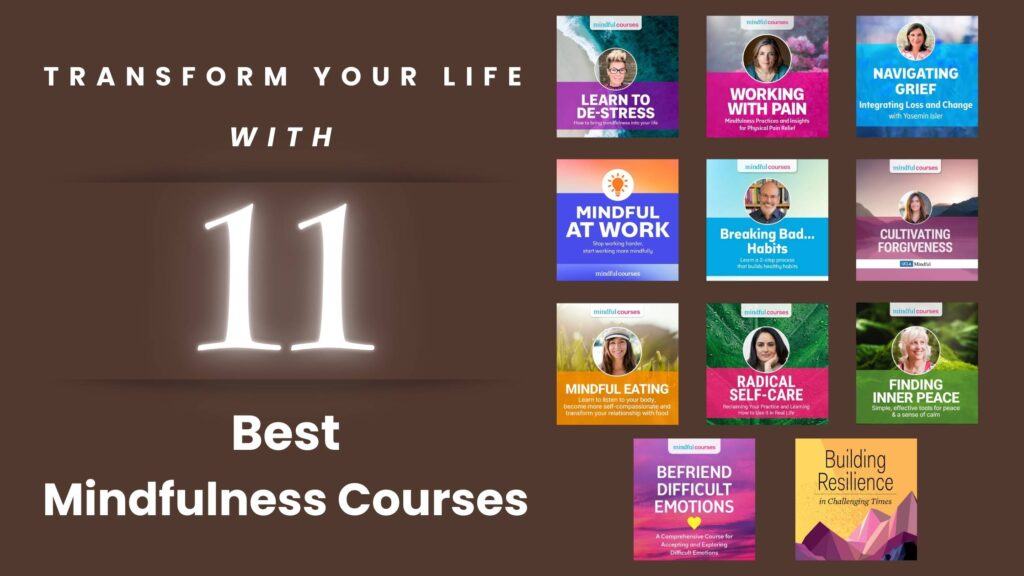
Deepen Your Mindfulness Practice
Explore these top mindfulness courses and find the one that best suits your needs.
Whether you want to reduce stress, build resilience, or cultivate self-compassion, there’s a course for you.
Start your journey today!
