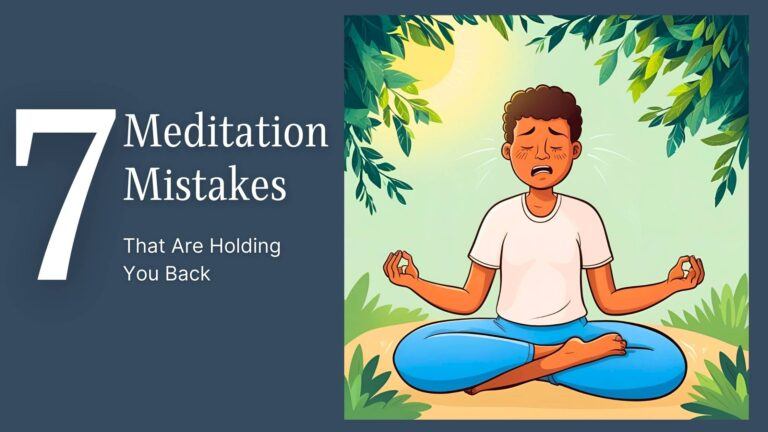
Why does meditation sometimes feel more frustrating than calming? If you’ve been trying to build a consistent practice but still feel stuck, distracted, or unsure if it’s even working, you’re not alone. Many beginners unknowingly make small meditation mistakes that get in the way of real progress. The good news? These issues are easy to fix once you recognize them.
In this post, you’ll learn seven common meditation mistakes that could be holding you back and practical tips to get your practice back on track.
1. Expecting Instant Results
Many people start meditating hoping to feel calm or clear-minded right away. But meditation isn’t a quick fix. It’s a skill that builds over time.
When you expect fast results, it’s easy to feel disappointed or think you’re doing something wrong if you don’t feel better after just a few sessions. The truth is, the benefits of meditation usually show up slowly and subtly. It’s like learning a new language or building muscle it takes regular practice.
In the beginning, you might still feel restless, distracted, or even bored during your sessions. That’s completely normal. These early challenges are part of the process, not a sign of failure.
Instead of focusing on quick outcomes, shift your focus to being consistent. Even just five or ten minutes a day can make a difference over time. Trust the process, and allow the benefits to grow naturally. Patience is one of the most powerful tools in meditation.
2. Trying to “Clear the Mind” Completely
One of the biggest misunderstandings about meditation is the idea that your mind should be completely empty. This belief causes a lot of frustration for beginners.
The truth is, having thoughts during meditation is totally normal. The mind naturally thinks that’s what it does. You’re not failing just because thoughts keep popping up. In fact, noticing that your mind has wandered and gently bringing it back is the practice of meditation.
Trying to force your mind to go blank often leads to more tension and stress. It’s like telling yourself, “Don’t think of a pink elephant” suddenly, that’s all you can think about.
Instead of fighting your thoughts, try observing them like clouds passing through the sky. You don’t have to chase them or push them away, just notice them and return your focus to your breath or whatever anchor you’re using.
Meditation isn’t about stopping your thoughts. It’s about changing your relationship with them being less caught up and more aware.
3. Being Too Rigid With Your Practice
Discipline is important, but being too strict about how and when you meditate can make the practice feel like a chore instead of something supportive.
Some people think meditation only “counts” if it’s done at the same time every day, in complete silence, sitting in the perfect posture. But life isn’t always that neat. If you miss a session or need to change your routine, that doesn’t mean you’ve failed.
Being too rigid can lead to guilt or even make you want to give up when things don’t go exactly as planned. Flexibility is key to building a long-term habit. You can meditate in the morning one day and in the evening the next. Some days it might be ten minutes, other days just three and that’s okay.
The goal is to stay connected to the practice, not to make it perfect. What matters most is showing up with intention, not sticking to strict rules. Being kind to yourself and adjusting as needed will help you stay consistent without burning out.
Loving the insights so far? If you’re ready to deepen your mindfulness practice, check out these amazing courses that can help you get there.


4. Judging Your Meditation Sessions
It’s easy to label your meditation as “good” or “bad” based on how focused or calm you felt. But this kind of judgment can hold you back more than you realize.
Some days, your mind might feel quiet and steady. Other days, it might be full of thoughts and distractions. That doesn’t mean one session is better than the other. In fact, noticing a busy mind is part of the practice. Every session teaches you something, even if it feels messy.
When you judge your meditation, you create pressure to perform a certain way. This can lead to disappointment or make you want to stop altogether. But meditation isn’t about getting it right. It’s about being present with whatever is happening, without labeling it as a success or failure.
Instead of evaluating your practice, try to meet it with curiosity. Ask yourself, “What did I notice today?” or “What was my mind doing?” This approach helps you build awareness without adding stress.
Progress in meditation often happens quietly and over time. Let go of judgment, and trust that every session counts, even the ones that feel hard.
5. Meditating Only When Stressed
Many people turn to meditation when they’re overwhelmed, anxious, or upset. While it can help in those moments, using it only during stress limits its full benefits.
Meditation is most powerful when it’s part of your daily routine, not just something you do in a crisis. If you only sit down to meditate when you’re stressed, your mind may be too agitated to focus. This can make the practice feel frustrating or even pointless.
Think of meditation like brushing your teeth. You don’t wait for a problem, you do it daily to stay healthy. In the same way, regular meditation helps build mental strength and emotional balance over time.
When you practice daily, even for a few minutes, you create a strong foundation. That way, when stressful moments do come, you’ll be better prepared to handle them.
Make meditation a habit, not just a tool for emergencies. A little bit each day goes a long way.
6. Ignoring the Body
Many people treat meditation as something that only happens in the mind. But the body plays an important role in your practice too.
If you sit down to meditate and ignore physical tension, pain, or restlessness, it can make it harder to focus. Uncomfortable sensations might pull your attention away again and again and you might not even realize why. Your body and mind are deeply connected, and what happens in one affects the other.
Before starting your session, take a moment to check in with your body. Are your shoulders tight? Is your jaw clenched? Are you holding your breath? These small tensions can add up and make your practice feel harder than it needs to be.
A short body scan or a few deep breaths at the beginning can help you relax and settle in. During the session, you can also stay aware of your body, notice your posture, your breathing, or any sensations without trying to fix them.
When you include the body in your practice, meditation becomes more grounded and balanced. It helps you feel more connected, calm, and present.
7. Comparing Your Practice to Others
It’s natural to wonder how your meditation practice measures up to others’. But constant comparison can make you doubt yourself and lose confidence.
You might hear someone say they meditate for an hour every day or that they feel peaceful all the time and start thinking you’re not doing enough. But meditation is a personal journey. Everyone starts from a different place and moves at their own pace.
What works for someone else might not work for you, and that’s okay. There’s no single “right” way to meditate. The key is to stay curious about your own experience and focus on what feels helpful for you.
When you compare yourself too much, you may push too hard, feel discouraged, or even stop practicing altogether. Instead, remind yourself that your progress is valid, even if it looks different from someone else’s.
Stay focused on your own growth. Celebrate small wins like showing up, staying present for a few breaths, or simply noticing when your mind wanders. These are signs of real progress.
Final Thoughts
Meditation is a simple but powerful practice but it’s easy to get discouraged if you’re unknowingly making these common mistakes. The good news is that with a little awareness and gentle adjustment, you can overcome these challenges and deepen your practice over time.
Remember, you don’t need to be perfect. Just showing up with patience, curiosity, and kindness toward yourself is already a big step forward. Keep going, real progress happens when you stick with it, even when it feels tough.
Hope you found this post useful! Want to take your meditation practice further? We’ve got some fantastic programs that could be just what you need.


Struggling to make meditation work for you? Check out these related posts to find out why it’s not clicking for you and how you can overcome the common obstacles beginners face.