Healing from trauma is not the same as learning to relax or calm the mind. For many people, traditional meditation can feel overwhelming when the nervous system doesn’t yet feel safe. That’s why trauma-sensitive approaches matter. The best meditation courses for trauma healing are designed to move slowly, prioritize safety, and work with the body rather than forcing the mind into stillness.
In this post, you’ll learn what makes a meditation course truly trauma-informed and why certain approaches are more supportive than others. You’ll also find a carefully selected list of meditation programs that focus on nervous system regulation, embodied awareness, and emotional safety. So you can explore healing at a pace that feels respectful and manageable.
Quick Comparison: Best Meditation Courses for Trauma Healing
If you’re short on time and want a quick overview, the table below compares the courses based on what each program focuses on, who it’s ideal for, and how supportive it is for trauma-sensitive practice. You can use this comparison to quickly identify which course may be the best fit for your current needs. Detailed mini-reviews of each course follow after the table.
Note: Star Ratings are based on trauma sensitivity, approachability, and overall usefulness for trauma healing.
| Course Name | Star Rating | Best For | Ideal For | Official Page |
|---|---|---|---|---|
| Trauma and the Embodied Brain | ⭐⭐⭐⭐⭐ | Understanding trauma through neuroscience & embodiment | Those who want a science-based, body-focused understanding of trauma | Visit Official Page |
| Trauma-Informed Mindfulness Training | ⭐⭐⭐⭐⭐ | Safe, gentle mindfulness for trauma recovery | Beginners and those sensitive to traditional meditation | Visit Official Page |
| Richard Miller’s Yoga Nidra Program | ⭐⭐⭐⭐⭐ | Deep nervous system rest & PTSD-friendly meditation | People experiencing hyperarousal, anxiety, or sleep issues | Visit Official Page |
| Peter Levine’s Body as Healer | ⭐⭐⭐⭐½ | Somatic healing and releasing stored trauma | Those drawn to body-based, non-verbal healing approaches | Visit Official Page |
| Embracing All of You | ⭐⭐⭐⭐½ | Emotional integration & self-acceptance | People working with emotional or developmental trauma | Visit Official Page |
This article contains affiliate links. If you choose to explore a course through these links, it supports this site at no extra cost to you.
1. Trauma and the Embodied Brain
Trauma and the Embodied Brain by Bonnie Badenoch, PhD, LMFT is an eight-week online training rooted in relational neuroscience that helps learners understand how trauma lives not only in the mind but in the body and nervous system. Rather than focusing on strict techniques or step-by-step practices, this course invites you to explore healing through connection, presence, and embodied awareness, recognizing that trauma often reflects relational experiences and nervous system responses rather than just past events.
What stands out most is its emphasis on felt experience over formula, offering concepts like “implicit vs. explicit memory,” co-regulation, and nervous system dynamics in ways that feel human, grounded, and compassionate. This approach makes it especially valuable for people who want to deepen their understanding of trauma from a body-and-relationship-focused perspective without feeling rushed into traditional meditation.
Who this is ideal for:
- Individuals beginning their trauma healing journey who want a non-technical introduction
- Therapists or practitioners looking to integrate embodied presence into their work
- Meditation practitioners curious about how trauma shapes nervous system patterns
What it’s best for:
- Understanding trauma through relational neuroscience
- Cultivating safety and attunement before deep meditation
- Exploring embodied awareness alongside mindful presence
Quick takeaway: This course feels less like a meditation manual and more like a compassionate re-orientation to how trauma and healing are felt in the body and relationships. An excellent foundation for trauma-informed meditation and mindfulness work.
Interested in learning more?
2. Trauma-Informed Mindfulness Training
Trauma-Informed Mindfulness Training is designed for people who want to practice mindfulness without feeling pressured, overwhelmed, or unsafe. Instead of asking participants to push through difficult sensations or emotions, this training emphasizes choice, pacing, and nervous system awareness, which are essential when working with trauma. The approach recognizes that mindfulness is not just about paying attention, but about learning how to pay attention in a way that feels supportive.
What makes this course especially helpful is its focus on safety and adaptability. Practices are offered with options, invitational language, and clear guidance on how to modify or pause when needed. This can be deeply reassuring for anyone who has struggled with traditional meditation styles that feel too intense or triggering. Rather than striving for stillness or insight, the course prioritizes grounding, stability, and self-trust.
Who this is ideal for:
- Beginners who feel hesitant about meditation due to past experiences
- Trauma survivors looking for a gentle entry point into mindfulness
- Teachers or facilitators who want to practice or teach mindfulness responsibly
What it’s best for:
- Learning mindfulness in a safe, trauma-sensitive way
- Building nervous system regulation before deeper practices
- Developing confidence and agency in meditation
Quick takeaway: This training offers a reassuring reminder that mindfulness can be kind, flexible, and supportive, making it an excellent option for trauma healing when safety and choice come first.
Interested in learning more?
3. Richard Miller’s Yoga Nidra Program

Richard Miller’s Yoga Nidra Program is a deeply restorative meditation course that focuses on Yoga Nidra, a guided practice of conscious relaxation that gently leads you into a state between waking and sleeping. For many trauma survivors, traditional meditation can feel too demanding or unsettling; Yoga Nidra, on the other hand, meets the nervous system where it is, offering a soft, structured path to rest without forcing stillness or intense focus.
What makes this program especially valuable for trauma healing is its focus on safety, ease, and nervous system regulation. Miller’s language is calming, invitational, and free of pressure, which allows participants to explore sensations and emotions at their own pace. This can help reduce hyperarousal, support sleep, and cultivate a felt sense of safety over time, all of which are crucial for healing and resilience.
Who this is ideal for:
- Anyone feeling overwhelmed by traditional meditation
- People struggling with anxiety, sleep issues, or hypervigilance
- Beginners seeking a restorative and gentle meditation experience
What it’s best for:
- Promoting deep relaxation and nervous system down-regulation
- Reducing stress without effortful concentration
- Creating a felt sense of calm and safety
Quick takeaway: If you want a meditation practice that feels accessible, soothing, and supportive of the nervous system, Richard Miller’s Yoga Nidra Program is an excellent choice, especially for those recovering from trauma who need kindness before intensity.
Interested in learning more?
4. Peter Levine’s Body as Healer
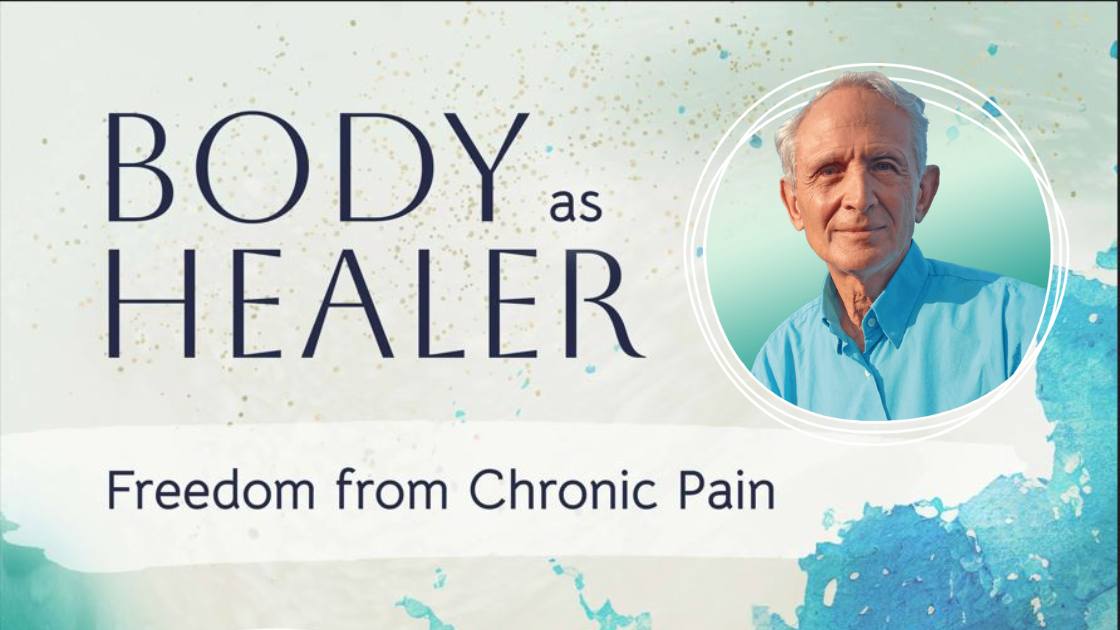
Peter Levine’s Body as Healer offers a somatic approach to trauma healing that goes beyond traditional meditation. Instead of asking you to sit still and quiet the mind, this course invites you to tune into the body’s wisdom, honoring the subtle sensations and movements that are often overlooked in typical mindfulness practices. For many trauma survivors, that’s exactly what makes Levine’s work feel so freeing, it meets the nervous system where it’s most alive, protective, and in need of gentle care.
What stands out is Levine’s emphasis on felt experience rather than forced control. The course encourages you to notice your body’s responses with curiosity, not judgment, which can help release long-held tension and rebuild a sense of safety from the inside out. Whether you’ve struggled with chronic tension, emotional overwhelm, or a mind that refuses to calm down, this somatic focus gives trauma healing a whole-body perspective that complements more traditional mindfulness.
Who this is ideal for:
- Anyone who finds stillness or effortful meditation frustrating
- People drawn to body-based healing rather than purely mental strategies
- Those ready to work with sensations, movement, and gentle awareness
What it’s best for:
- Releasing tension held in the nervous system
- Supporting embodied safety and resilience
- Helping the body and nervous system become allies in healing
Quick takeaway: If you want a trauma-healing path that starts with the body and works outward, Peter Levine’s Body as Healer is a compassionate, grounded way to explore healing beyond quiet sitting, with curiosity and kindness at every step.
Interested in learning more?
5. Embracing All of You
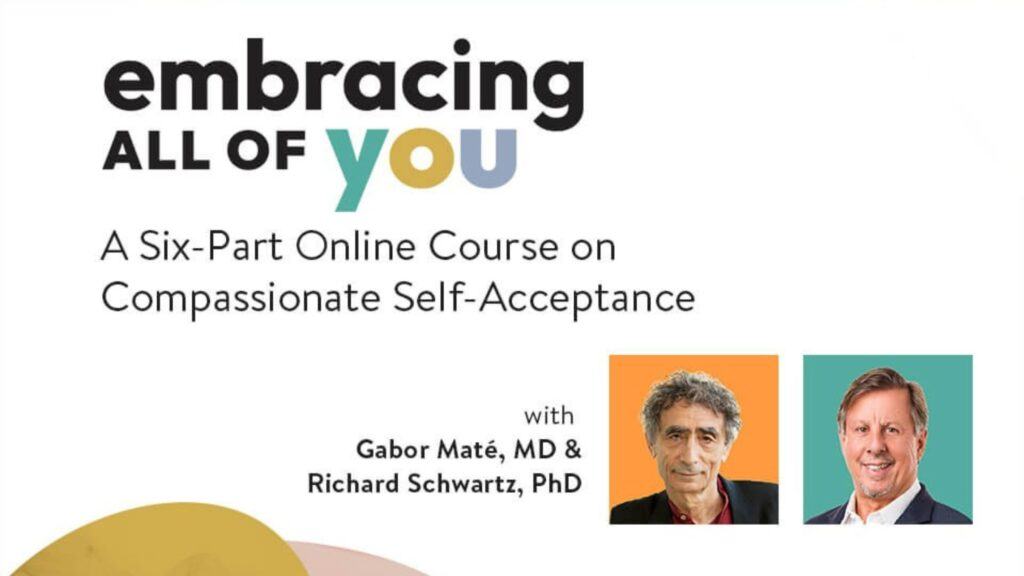
Embracing All of You is a gentle and compassionate course that supports healing through self-acceptance, inner connection, and emotional integration. Unlike meditation programs that focus primarily on quieting the mind, this training invites you to meet all parts of yourself, including the wounded, resistant, or uncomfortable ones, with curiosity and kindness. For people recovering from trauma, this approach can feel grounding and validating, especially when old survival parts still feel active or protective.
What makes this course particularly valuable for trauma healing is its emphasis on non-judgmental awareness and inner listening rather than striving for calm or perfection. The lessons help you build a sense of trust with your own experience, encouraging you to notice thoughts, emotions, and sensations without shame. This can reduce the internal conflict many trauma survivors feel and create space for self-compassion, which in turn supports deeper regulation and resilience.
Who this is ideal for:
- People who struggle with self-criticism or internal conflict
- Anyone looking for a mindful, heart-centered approach to healing
- Beginners and experienced meditators alike who want to blend awareness with emotional warmth
What it’s best for:
- Cultivating self-acceptance and emotional safety
- Learning to relate to internal experiences with gentleness
- Supporting a trauma healing journey with mindfulness that honors the whole self
Quick takeaway: If you want a meditation course that feels supportive, compassionate, and grounded in emotional understanding, Embracing All of You can be a deeply reassuring complement to more body-focused or nervous system-oriented approaches.
Interested in learning more?
What to Look for in a Trauma-Healing Meditation Course
Not all meditation courses are designed with trauma in mind. In fact, some well-intentioned programs can feel overwhelming if they move too fast or place too much emphasis on sitting still, observing discomfort, or “pushing through” difficult experiences. When it comes to trauma healing, how a course is taught matters just as much as what is being taught.
First, look for a course that emphasizes safety and choice. Trauma-healing meditation should feel invitational, not demanding. Courses that offer options, such as keeping your eyes open, adjusting posture, or stepping back from a practice when needed, help rebuild a sense of control and trust in the body.
Second, pay attention to whether the course includes nervous system awareness. Trauma lives in the nervous system, not just in thoughts or memories. Programs that focus on grounding, regulation, and gentle awareness tend to be far more supportive than those that jump straight into deep silence or intense introspection.
It’s also helpful to choose courses that work with the body, not against it. Somatic approaches, Yoga Nidra, and embodied mindfulness practices allow healing to unfold gradually through sensation and presence, rather than forcing insight through effort.
Finally, trust your own responses. A trauma-healing meditation course should feel supportive, respectful, and paced in a way that feels manageable. If a program encourages kindness, curiosity, and patience, it’s often a good sign that it’s aligned with trauma-informed healing.
Final Thoughts
Healing from trauma is a journey, and meditation can be a powerful companion when approached with care, safety, and compassion. The courses featured here are designed to meet you where you are, whether you’re just beginning to explore mindfulness, looking for ways to regulate your nervous system, or seeking a deeper connection with your body and emotions.
Remember, there’s no single “right” path. Some people benefit from understanding the neuroscience of trauma, others from somatic practices, and still others from cultivating emotional self-acceptance. The most important thing is to choose a course that feels supportive, manageable, and safe for you, and to approach your practice with patience and kindness toward yourself.
Take your time exploring these options, and allow your healing to unfold at your own pace. Every small step you take with awareness and care is a step toward greater resilience, self-understanding, and inner calm.
Please note I receive compensation if you click on any links mentioned in this post to purchase a product or service from a third-party website. Also, purchasing a product or service from the above links does not increase your purchase price, however, it is a great way to thank me if you enjoy my content and find my suggestions useful. I only recommend products and services that I have personally used or thoroughly researched.
