
Mindfulness has become a cornerstone of mental health and wellness practices, but did you know that without proper guidance, it can sometimes trigger emotional distress, especially for trauma survivors? That’s where Trauma Informed Mindfulness Training comes in, a specialized approach that ensures mindfulness practices are safe, supportive, and healing for everyone.
Whether you’re a mindfulness teacher, therapist, or someone passionate about guiding others on their journey, this training equips you with essential tools to navigate the delicate intersection of trauma and mindfulness.
In this post, you’ll discover why trauma-informed mindfulness is essential, explore the unique features of a leading training program, and learn how this certification can transform the way you support others in their healing journey.
The Need for Trauma-Informed Mindfulness
Mindfulness has the potential to be a transformative tool for healing, yet for individuals with a history of trauma, it can sometimes lead to unintended distress. This is why trauma-informed mindfulness is not just beneficial, it’s essential.
How Trauma Manifests in Mindfulness Practices
For trauma survivors, mindfulness can bring suppressed memories or feelings to the surface, sometimes with overwhelming intensity. Practices designed to focus inward, such as meditation, may inadvertently lead to flashbacks, dissociation, or heightened emotional responses.
For example, a simple breathing exercise might trigger panic in someone whose trauma involved breathing difficulties, or sitting in silence could evoke a sense of helplessness or fear.
These experiences, while unintended, reveal how mindfulness can act as both a healer and a trigger. Without proper guidance, individuals may feel unsafe, overwhelmed, or retraumatized, potentially hindering their healing journey.
Why Mindfulness Teachers Must Adopt Trauma-Informed Strategies
Trauma-informed strategies enable instructors to recognize signs of distress, such as hyperarousal (anxiety, restlessness) or hypoarousal (numbness, disconnection). By integrating these strategies, teachers can modify their sessions to better support trauma survivors.
For instance, offering grounding exercises before meditation helps participants stay connected to the present moment, reducing the risk of dissociation. Shorter sessions or practices that emphasize movement can also provide more accessible entry points for individuals with trauma.
Ultimately, trauma-informed mindfulness empowers teachers to create an inclusive environment where participants feel seen, supported, and in control of their practice. This approach not only enhances the healing potential of mindfulness but also fosters trust and resilience among participants.
Overview of Trauma-Sensitive Mindfulness Training
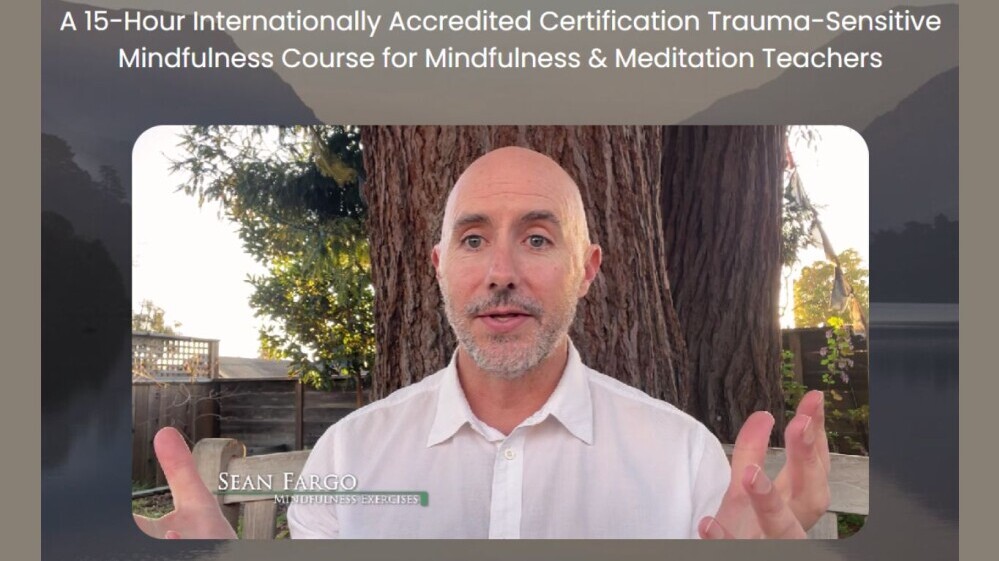
For mindfulness teachers seeking to deepen their skills and ensure the safety of their students, the Trauma-Sensitive Mindfulness Training offers a comprehensive, evidence-based pathway.
Developed by Sean Fargo, a former Buddhist monk and mindfulness expert, has designed this course to balance theoretical insights with practical tools, making it accessible and actionable for mindfulness teachers, therapists, and wellness professionals.
The 15-Hour, Internationally Accredited Program by Sean Fargo
This training stands out as one of the most respected offerings in trauma-sensitive mindfulness. With accreditation from the International Mindfulness and Meditation Alliance (IMMA) and the Continuing Professional Development (CPD) Certification Service, it is recognized globally for its quality and depth.
Self-Paced Structure & Certification Requirements
This self-paced, on-demand course allows participants to progress at their own speed, making it ideal for busy professionals. To earn the certification, participants are required to:
- Watch or listen to all the course lessons.
- Complete a detailed workbook that includes teachings and reflection exercises.
- Lead six trauma-sensitive meditation sessions in their communities and submit self-assessment forms for feedback.
This hands-on approach ensures that participants not only absorb the concepts but also practice and refine their skills in real-world settings. The program also provides constructive feedback to help teachers improve their understanding and application of trauma-sensitive techniques.
Key Course Features
The training is packed with resources to support learning and implementation:
- Video Masterclasses: Learn directly from world-renowned mindfulness experts, including David Treleaven, Willoughby Britton, Chris Germer, and Sean Fargo, who share their insights and expertise in trauma-sensitive mindfulness.
- Comprehensive Workbook: This in-depth guide includes teachings, reflection questions, and exercises designed to deepen understanding and reinforce learning.
- Trauma-Sensitive Mindfulness Scripts: Participants receive three ready-to-use scripts to inspire and guide their own teaching practices.
These features ensure that participants gain not only theoretical knowledge but also practical tools to create safe, empowering, and effective mindfulness experiences for their students.
What You Will Learn in This Course
This course is structured into six thoughtfully designed modules, each addressing critical aspects of trauma-informed mindfulness. Together, they provide a comprehensive foundation for safely and effectively teaching mindfulness practices to trauma survivors.
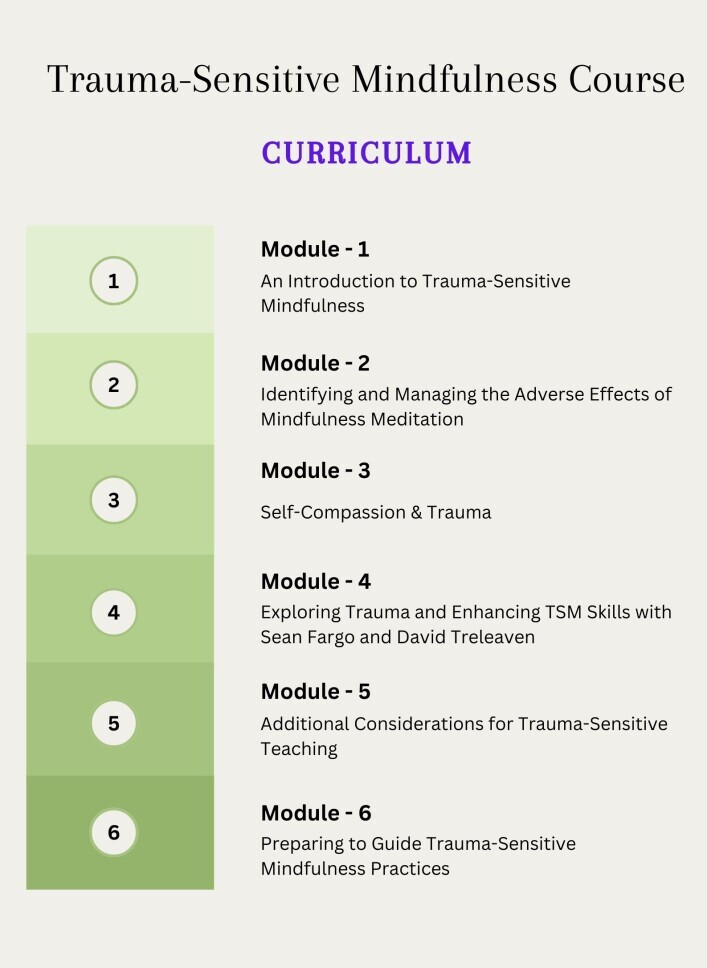
Module 1: Foundations of Trauma Sensitivity
- This opening module lays the groundwork by distinguishing trauma-sensitive mindfulness from trauma-focused approaches.
- Participants learn the “double-edged sword” of mindfulness, its potential for healing as well as harm and explore the Four Rs of trauma-sensitive mindfulness:
- Recognize, Reframe, Respond, and Restore. These principles set the stage for creating safe and empowering mindfulness experiences.
Module 2: Managing Mindfulness-Related Adverse Effects
- Trauma can manifest in unexpected ways during mindfulness practices, such as flashbacks, dissociation, or emotional overwhelm.
- This module equips teachers with the skills to identify these signs and respond appropriately.
- Participants learn proven strategies for modifying practices to prevent re-traumatization, ensuring mindfulness remains a safe and supportive space for all.
Module 3: The Interplay of Self-Compassion and Trauma
- Self-compassion is a cornerstone of resilience and healing, particularly for trauma survivors.
- This module dives into the relationship between self-compassion and trauma recovery, teaching participants how to foster a sense of agency and self-kindness in their students.
- Through this lens, mindfulness becomes a tool for empowerment rather than avoidance.
Module 4 to 6: Integration Sessions & Advanced Techniques
- In addition to the core modules, the training includes advanced sessions led by Sean Fargo and David Treleaven.
- These integration discussions delve deeper into concepts like hypoarousal, hyperarousal, and the “window of tolerance” a framework for understanding and working within students’ emotional and physiological limits.
- The training also covers advanced mindfulness techniques and evidence-based interventions that help participants refine their trauma-sensitive teaching methods.
- From grounding practices to tailored meditation scripts, these tools empower teachers to meet their students’ diverse needs with confidence and care.
By the end of these modules, participants will have gained both the theoretical knowledge and practical skills necessary to redefine how mindfulness is taught, making it safer and more effective for trauma survivors.
Is This Course Right for You?
Determining whether the Trauma-Sensitive Mindfulness Training aligns with your needs and goals is crucial. This course caters to a wide range of individuals who share a common interest in making mindfulness practices safer and more inclusive, while also fostering personal and professional growth.
For Mindfulness Teachers Feeling Unprepared
- If you’re a mindfulness teacher who struggles with navigating trauma-related situations in your classes, this course is designed for you.
- Many teachers feel uncertain about how to respond when students experience distress, dissociation, or other adverse effects during mindfulness sessions.
- This program equips you with the tools and language to address such challenges with sensitivity and confidence, enabling you to create a safe and supportive environment for your students.
Essential for Educators & Therapists
- Beyond mindfulness teachers, this course is highly beneficial for educators, therapists, and healthcare professionals who incorporate mindfulness into their work.
- Trauma can surface in various settings, and having the skills to recognize and manage these dynamics is invaluable.
- Whether you’re guiding students, supporting clients, or treating patients, this training will help you integrate mindfulness practices that are both effective and trauma-sensitive.
Personal Growth for Trauma Survivors
- The course also speaks to individuals who are on their own journey of healing from trauma.
- While the primary focus is on teaching others, the principles and practices shared in the program can foster profound personal growth.
- By deepening your understanding of trauma sensitivity and practicing self-compassion, you can model resilience and awareness for your students while continuing your own healing journey.
Final Thoughts
Adopting trauma-informed mindfulness practices is not just an option, it’s a responsibility for anyone teaching mindfulness and meditation. By prioritizing safety, sensitivity, and empowerment, you can transform mindfulness into a tool that heals without harm, fostering resilience and growth in those you serve.
The Trauma-Sensitive Mindfulness Training stands out as a premier resource for developing these essential skills. With internationally recognized accreditation by IMMA and CPD, the program offers credibility and global acknowledgment of your expertise.
Furthermore, the course is led by an exceptional team of instructors, including Sean Fargo, David Treleaven, and other world-renowned experts who bring years of research, practice, and compassion to the table.
Now is the time to invest in your teaching skills and the well-being of your students. Take the next step in your journey, explore the Trauma-Sensitive Mindfulness Training and begin your certification today.
Empower yourself to guide others with confidence, care, and compassion.
Please note I receive compensation if you click on any links mentioned in this post to purchase a product or service from a third-party website. Also, purchasing a product or service from the above links does not increase your purchase price, however, it is a great way to thank me if you enjoy my content and find my suggestions useful. I only recommend products and services that I have personally used or thoroughly researched.
Looking for a Brandable Mindfulness Teaching Curriculum without needing a certification?

Increase Your Impact & Income with Brandable Mindfulness Curriculum
Download 15 Hours Worth of Monetizable Mindfulness Teachings That You Can Teach From with Your Own Name & Logo
Ready to become an Internationally Accredited Mindfulness Meditation Teacher?

Namaste,
My name is Ashok Nair and as I enter the third and most beautiful phase of my life I am trying to get some clarity and at the same time pursue a certification that can be used to help myself and others around me in my community. However, it is so hard to choose the right program and I have been contemplating for the last two years to opt in for the right certification. I would love to have a conversation with Sean if I may to take a final decision.
I look forward to hearing from you.
Thank you.
Warm regards,
Ashok Nair
Canada
Namaste Ashok,
Thank you for sharing your journey. It’s inspiring to see your dedication to finding the right certification to help both yourself and your community.
Since you’ve been contemplating this decision for the past two years, why not take the next step and experience the program firsthand? You’ll have full access to the course materials, and if it doesn’t feel like the right fit, you can opt out within 7 days and receive a full refund, no risk involved.
Plus, enrolling in the program will give you the opportunity to engage with Sean Fargo and gain deeper clarity on your path. Sometimes, the best way to decide is to take the first step and see where it leads.
Wishing you the best on your journey!