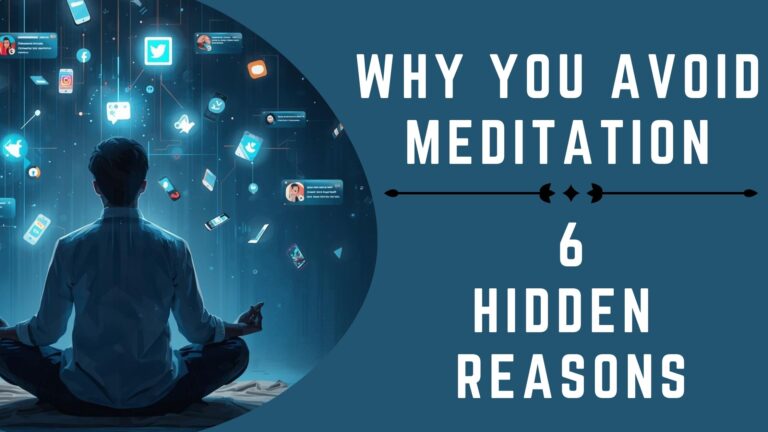
I used to think meditation just wasn’t for me. Every time I tried, my mind would race, my body felt restless, and I’d end up quitting after a few minutes or worse, never starting at all. If you’ve ever felt the same, then you’re not alone and that’s exactly why I decided to write this post about why you avoid meditation.
Over time, I realized that avoiding meditation isn’t about laziness or lack of discipline; it’s about subtle, often overlooked reasons that sneak up on all of us. In this article, I’m going to share the six subtle reasons I and many others keep putting off meditation, along with practical, tiny actions you can try today that actually work. No long, complicated routines, no guilt, just simple ways to start feeling calmer and more present, even in just a few minutes.
Reason #1: I’m Afraid of My Own Thoughts
I used to avoid meditation because, honestly, I was scared of what I’d find when I slowed down. Every time I tried to sit quietly, my mind would explode with worries, memories, and random “what-if” scenarios. I thought meditation was supposed to calm me, but all it did was make me face my own thoughts and that felt uncomfortable, even overwhelming.
Here’s what helped me finally start: I set a 2-minute timer and gave myself permission to just notice whatever thoughts came up, no judgment, no trying to “fix” them. I would label them silently in my head: “worrying…planning…thinking…” and then gently bring my focus back to my breath.
The first time I did this, something surprising happened, I realized my mind wasn’t my enemy. It was just talking, like a friend chatting too fast. That tiny shift in perspective made meditation feel doable instead of terrifying. And the best part? Even after just two minutes, I felt a subtle sense of calm, like a small pause in the chaos.
Actionable Tip: Try a 2-minute timer right now. Sit somewhere comfortable, close your eyes, and simply notice each thought as it comes. Name it, and then return to your breath. No judgment. No expectations. Just two minutes and you’ll see how much easier meditation starts to feel when you stop fighting your own mind.
Reason #2: I’m Too Busy (or Think I Don’t Have Time)
I used to tell myself I was too busy to meditate. Between work, errands, and everything else on my plate, sitting down for 10 or 20 minutes felt impossible. I thought meditation was supposed to be a long, quiet ritual, and if I couldn’t commit fully, why even try? That belief kept me avoiding it for months.
Then I realized something important: meditation doesn’t have to take a huge chunk of time. Even micro-moments count. I started experimenting with tiny pockets, while waiting for my coffee to brew, brushing my teeth, or even standing in line at the store. Two minutes here, one minute there, it added up, and surprisingly, it made me feel calmer and more focused throughout the day.
Actionable Tip:
Find one tiny moment in your day to try a micro-meditation. It could be:
- Taking 1-2 mindful breaths while brushing your teeth
- Feeling the sensations in your body while waiting for your coffee
- Noticing your surroundings during a quick walk
Just a minute or two is enough to start. The key is consistency, not duration.
I started with 90 seconds of mindful breathing while waiting for my coffee. At first, it felt almost silly, like it couldn’t make a difference. But by the third day, I noticed I was calmer, less stressed, and actually more productive. That tiny window became my gateway to meditating without feeling like I had to “find time.”
Does your mind feel like it’s running non-stop?
If racing thoughts, work stress, or emotional exhaustion are making it hard to focus, you don’t have to deal with it alone. Explore simple techniques that help you slow down your mind, reset your emotions, and find clarity, even on the busiest days.


Reason #3: I Expect Instant Calm and Get Frustrated
I used to avoid meditation because I thought it would magically quiet my mind immediately. I’d sit down, close my eyes, and expect instant calm, but instead, my thoughts bounced around like ping-pong balls. I would get frustrated and think, “I’m doing something wrong. This isn’t working.” That expectation made meditation feel like a failure before I even started.
The truth is, meditation isn’t about eliminating thoughts, it’s about noticing them. Our brains naturally wander, and that’s perfectly normal. The moment I stopped expecting perfection and started celebrating small wins, like noticing when my mind drifted, I finally started enjoying the process.
Actionable Tip:
Set a 2–5 minute timer. Sit comfortably, focus on your breath, and simply notice when your mind wanders. Instead of trying to stop the thoughts, just label them: “thinking…wandering…planning…” and return to your breath. Celebrate the awareness itself as a win.
I remember one morning when I got frustrated after 30 seconds of meditation. But then I tried labeling my thoughts instead of judging myself, and suddenly I felt a tiny wave of calm. That small success made me realize meditation wasn’t about perfection, it was about noticing and returning. From that day on, I stopped quitting after a few seconds, and even short sessions felt rewarding.
Reason #4: I Don’t Like Sitting Still
I used to avoid meditation because sitting still felt uncomfortable, my legs would get restless, my back would ache, and I couldn’t stop fidgeting. I thought meditation required sitting cross-legged for long periods, and since that didn’t feel natural for me, I convinced myself it wasn’t for me at all.
Then I discovered something important: meditation doesn’t have to mean sitting perfectly still. Movement can be meditation too. Walking, stretching, or even gentle yoga can be just as powerful if you focus on your breath and the sensations in your body. This small shift removed a huge mental block I didn’t even realize I had.
Actionable Tip:
Try a movement-based meditation for 2–5 minutes. Options include:
- Walking slowly and noticing each step
- Stretching while focusing on your breath
- Gentle yoga poses while being aware of sensations in your body
The goal is simply to bring awareness to your body and breath, not to force stillness.
I remember one afternoon I decided to try walking mindfully for three minutes. I focused on how my feet touched the ground and how my breath moved in and out. To my surprise, I felt calmer and more centered than I ever had sitting cross-legged. That small experiment taught me that meditation could adapt to my natural tendencies and that made it much easier to stick with it.
Stress, anxiety, and emotional healing often require more than quick fixes.
Discover meditation courses that are specifically designed to help you relax your mind, process difficult emotions, and build inner resilience at your own pace.
Reason #5: I Feel Guilty for Taking ‘Me Time’
I used to avoid meditation because I felt guilty taking time just for myself. My schedule was already packed, and I kept thinking, “Shouldn’t I be working, helping others, or checking things off my list instead?” Sitting down to meditate felt indulgent, selfish even, and that guilt made it easy to skip altogether.
Over time, I realized that meditation isn’t a luxury, it’s fuel for everything else. Even a couple of minutes of mindfulness helps me show up calmer, more focused, and more patient in my day. Taking care of myself doesn’t take away from others; it actually improves the way I interact with them.
Actionable Tip:
Give yourself permission to meditate guilt-free, even if it’s just for 2 minutes. Remind yourself: “This is not selfish. I’m recharging so I can show up better.” Find a small window—maybe before breakfast, while waiting for the shower, or right after work—to practice without judgment.
I started meditating for just two minutes before breakfast. At first, I felt a pang of guilt, thinking I should be doing something “productive.” But by the third day, I noticed I was calmer during my morning meetings and more patient with my family. That tiny window became my sacred reset, and the guilt quickly faded.
Reason #6: I’m Overwhelmed by Meditation Styles
I used to avoid meditation because there were just too many options. Guided meditations, unguided, mantras, body scans, mindfulness apps, you name it. Every time I tried to choose one, I froze, thinking, “Which one is right? What if I’m doing it wrong?” That overwhelm made it easier to do nothing at all.
Then I realized something simple but powerful: I didn’t need to try them all. I just needed one method to start with, and I could refine it over time. Focusing on one simple practice, like following my breath for a couple of minutes, removed the paralysis and made meditation approachable.
Actionable Tip:
Pick one simple meditation method for today. For example:
- Focus on your breath for 2–3 minutes
- Listen to a short guided meditation that resonates with you
- Notice sensations in your body for a few minutes
The key is consistency over variety. You can explore other styles later, but starting small is what matters.
I remember feeling completely stuck choosing between different apps and techniques. Once I committed to just 2 minutes of focusing on my breath, everything changed. That tiny commitment helped me actually start meditating, and I gradually explored other styles without feeling overwhelmed.
Final Thoughts
If you’ve been avoiding meditation, it doesn’t mean you lack discipline. Most people struggle because of small mental barriers like fear of thoughts, unrealistic expectations, or simply not knowing where to start.
The good news is that meditation doesn’t require long sessions or perfect focus. Even two minutes of awareness can begin changing how you relate to your mind.
Instead of trying to build a perfect meditation routine, start with one tiny action today.
Not sure where to start with meditation?
Whether you’re a beginner or someone looking to strengthen mindfulness, structured courses can guide you toward better focus, stronger confidence, and meaningful personal growth.