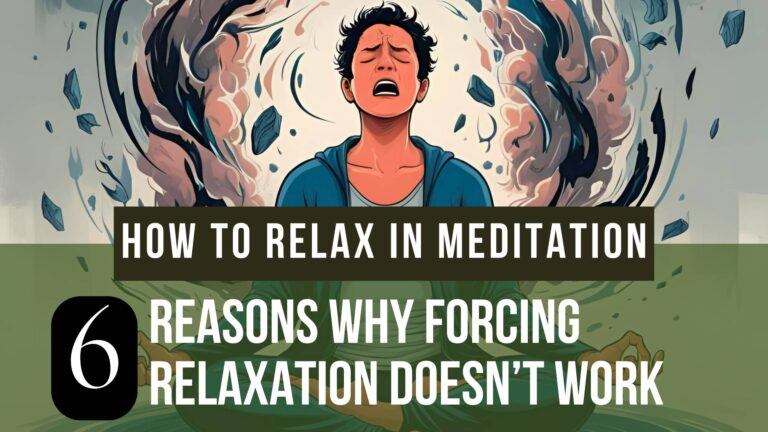
Why is it so hard to relax when you’re trying to relax? Many people sit down to meditate with the goal of feeling calm, only to end up feeling more tense and frustrated. If you’ve been wondering how to relax in meditation, but keep finding it difficult, you’re not alone. The truth is, the harder we try to force relaxation, the more it slips away.
In this post, we’ll explore six common reasons why forcing relaxation doesn’t work during meditation, and more importantly, what you can do instead to let ease arise naturally.
1. Forcing Relaxation Activates the Stress Response
It might sound strange, but trying hard to relax can actually make you feel more stressed.
When we force ourselves to relax, by tightening our body, controlling our breath, or mentally demanding calm, we accidentally activate the body’s stress response. This is because the very act of “trying” sends a signal to the brain that something is wrong or needs fixing.
Our nervous system picks up on this sense of urgency and moves into a state of alertness, not ease. Muscles stay tense, breathing becomes shallow, and the mind stays busy. Instead of calming down, we end up feeling more uncomfortable.
Relaxation in meditation doesn’t come from effort, it comes from creating a safe and supportive inner environment. When you allow yourself to just be, without trying to feel a certain way, the body begins to soften and the mind becomes still on its own.
2. It Turns Meditation into a Performance
When we try to force relaxation, meditation can start to feel like something we have to “get right.”
Instead of simply sitting and observing the moment, we may start judging our experience: Am I relaxed enough? Am I doing this properly? Why don’t I feel calm yet? This mindset turns meditation into a task or performance, where we feel pressure to succeed.
But meditation is not about achieving a perfect state. It’s not a competition or a skill to be measured. It’s about being with what is; whether that’s tension, restlessness, or peace with openness and curiosity.
When you treat meditation like something to perform well, it adds stress and takes you further away from genuine presence. The more you let go of expectations and allow yourself to simply experience the moment without trying to control it, the more meditation begins to feel natural and calming.
3. Resistance to Tension Makes it Stronger
The more we fight tension, the more it tends to stick around.
In meditation, it’s common to notice tightness in the body or restlessness in the mind. Our first reaction is often to push these feelings away or try to fix them. But resisting what we feel can actually make those sensations stronger. This is because our attention becomes locked onto them with frustration or judgment.
There’s a helpful saying in mindfulness: “What we resist, persists.” When we resist tension, we give it more energy. It becomes something we’re battling, instead of simply noticing.
A better approach is to gently allow the tension to be there. Instead of trying to get rid of it, try observing it with curiosity: Where do I feel this in my body? Does it change as I breathe? Can I let it be without needing it to go away?
Often, just allowing tension to exist without a fight helps it loosen naturally.
Struggling to make meditation work for you? Check out these related posts to find out why it’s not clicking for you and how you can overcome the common obstacles beginners face.

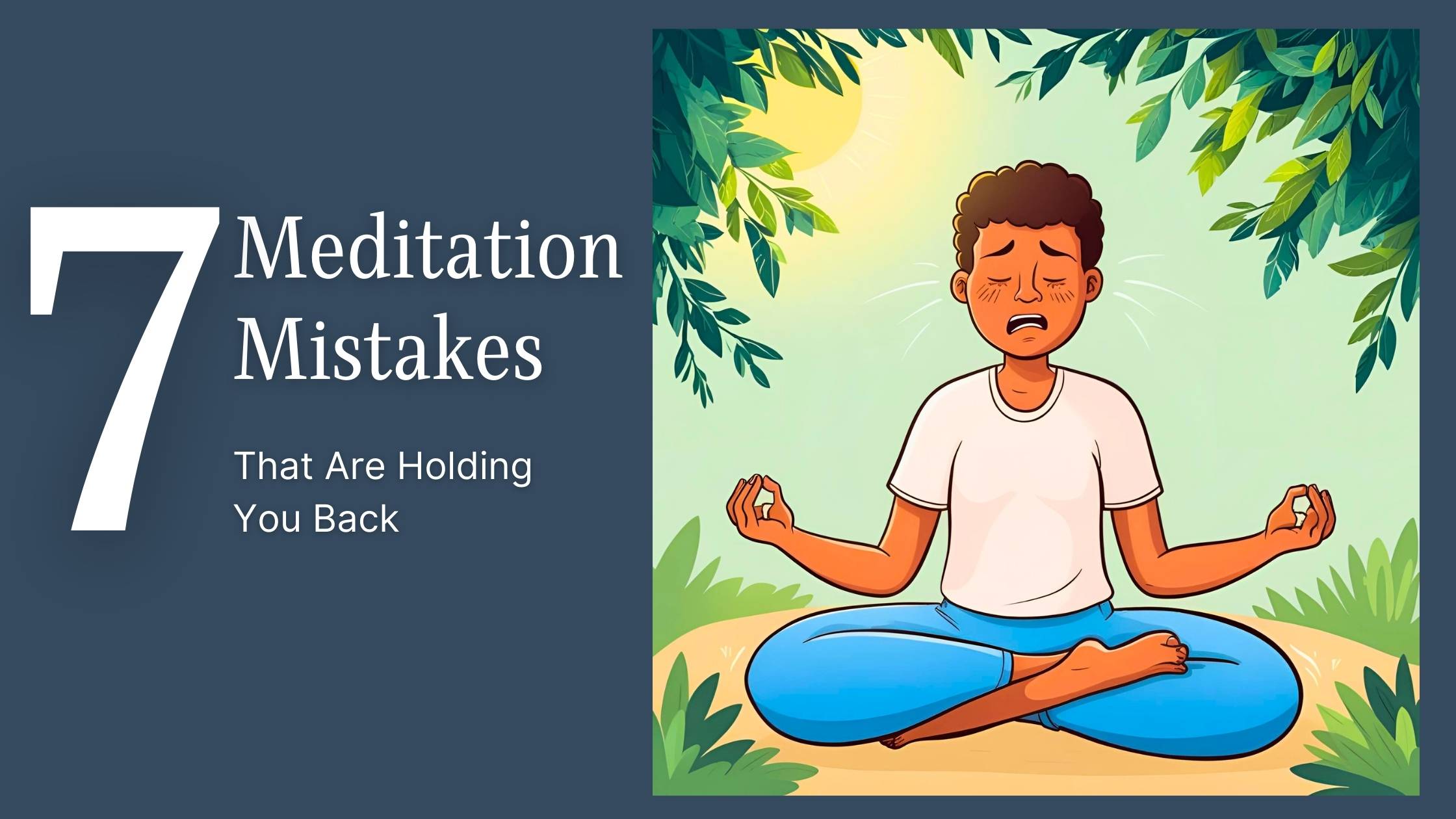
4. It Disrupts Natural Awareness
Meditation works best when we allow awareness to unfold naturally, without trying to control it.
When you force yourself to relax, your attention often becomes narrow and tense. You might start thinking things like, I need to stop thinking, or I must calm down now. This creates a sense of struggle between how things are and how you want them to be.
But true awareness in meditation is open and accepting. It’s about noticing what’s happening; your thoughts, body sensations, and emotions, without needing to change anything.
Trying too hard pulls you out of this natural state and puts you into a mindset of doing instead of being. It creates a split where you’re watching yourself too closely, almost like a referee checking if you’re “doing it right.”
When you drop the effort and let your awareness rest lightly on the present moment, meditation becomes more peaceful and less forced. This simple shift can open the door to genuine relaxation.
5. It Overlooks the Role of Acceptance
Many people forget that acceptance is one of the most important parts of meditation.
When we sit down to meditate, we often want to feel peaceful or relaxed right away. But if we’re tense, distracted, or uncomfortable, we may feel like something is wrong. We try to fix it. We try to force calm. But this only creates more struggle.
Real relaxation begins when we stop fighting our experience and start accepting it, just as it is. If your body feels tight, notice it without trying to change it. If your mind is busy, let the thoughts come and go without getting caught up in them.
Acceptance doesn’t mean giving up. It means letting things be, without judgment. When you accept your current state, whether it feels good or not, you create space for natural ease to return.
Paradoxically, the more you accept how you feel, the more likely you are to relax. This is one of the simplest but most powerful lessons in meditation.
6. It Creates Unrealistic Expectations
When we expect to feel calm right away, we often set ourselves up for disappointment.
Many people come to meditation thinking they’ll feel peaceful after just a few minutes. While that sometimes happens, it’s not always the case, especially in the beginning. If you believe that meditation must make you feel relaxed every time, you may feel like you’re doing it wrong when it doesn’t happen.
These kinds of expectations add pressure. You might start thinking, Why am I still tense? This isn’t working. That frustration only makes it harder to relax.
Meditation is a practice. It takes time, patience, and a gentle attitude. Some sessions may feel calm, while others may feel restless, and that’s okay. The goal is not to feel a certain way, but to show up, notice what’s there, and let go of the need to control the outcome.
By releasing expectations, you create space for real relaxation to happen naturally, without force.
Conclusion: Let Relaxation Happen, Don’t Force it
Relaxation can’t be forced, but it can be invited. The more you stop trying to control your meditation experience, the more natural and easy relaxation becomes.
To cultivate this, focus on simple awareness: gently bring your attention to the breath without trying to change it. Notice sensations in your body and mind, but try not to label them as “good” or “bad.” Instead, allow your experience to be exactly as it is, moment by moment.
Practice acceptance and kindness toward yourself. Meditation is not about achieving a perfect state but about being present with whatever arises.
Remember, the more you let go of trying to relax, the more relaxation will come naturally.
Hope you find this post useful! Want to take your meditation practice further? We’ve got some fantastic programs that could be just what you need.