
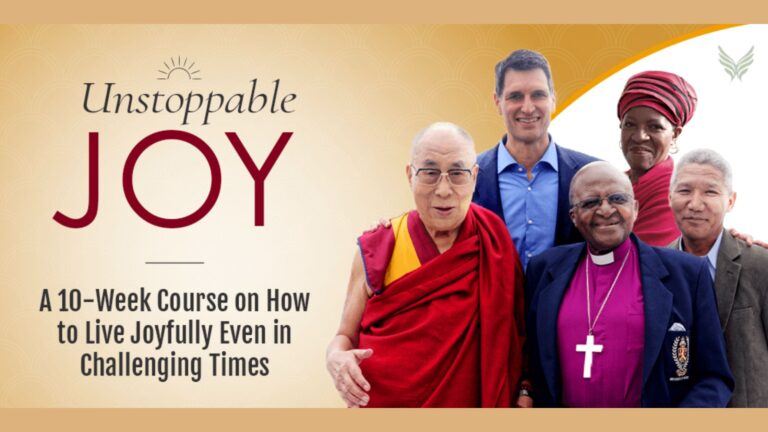
Why is it that some people stay joyful even when life feels overwhelmingly difficult? The Unstoppable Joy course, inspired by the teachings of the Dalai Lama and Archbishop Desmond Tutu, explores this very question. Both leaders lived through immense hardship yet still embodied a steady, grounded joy that feels almost impossible, until you learn what shaped their inner resilience.
This program was created to explore how that kind of inner strength is actually built. Not by avoiding pain or pretending everything is fine, but by training the mind and heart to see joy as something we can cultivate, even during challenging times. As I reviewed the course materials and read through the teachings behind them, what stood out is how practical and human these lessons feel. They’re not about forced positivity, they’re about discovering what real joy is made of.
In this review, I’ll walk you through what Unstoppable Joy presents, how the creators structure each module, the types of practices included, and what you can expect if you decide to learn from these teachings. I’ll also share my impressions of the structure, tone, and guidance inside the course, along with who I believe will benefit the most.
What Unstoppable Joy Is About
Unstoppable Joy is an online course designed to help you understand joy as something steady and reliable not something that disappears the moment life becomes difficult. Instead of connecting joy to “good days” or “good circumstances,” this program shows how it can become a daily inner skill you can return to, even during stressful or painful moments.
The course is built around five days of heartfelt conversations between His Holiness the Dalai Lama and Archbishop Desmond Tutu, the same dialogues that inspired The Book of Joy and the documentary Mission: JOY. These teachings are profound, but the course delivers them in a simple, practical way that feels accessible to beginners.
Throughout the modules, you explore what the teachers call the Eight Pillars of Joy, which are:
- Perspective
- Humility
- Humor
- Acceptance
- Forgiveness
- Gratitude
- Compassion
- Generosity
Each pillar is paired with real stories, gentle reflections, and guided practices that help you understand how these qualities can shift your daily experience.
You’re supported by three main guides:
- Douglas Abrams, coauthor of The Book of Joy
- Dr. Thupten Jinpa, the Dalai Lama’s longtime translator
- Rev. Canon Mpho Tutu van Furth, daughter of Archbishop Tutu
Together, they help explain these teachings in clear, grounded language. They also share journaling prompts and simple exercises that make the lessons feel easy to apply in everyday life.
At its core, this course is about discovering how joy actually works, not as a quick burst of happiness, but as an inner foundation that strengthens over time.
How the Course Works (Structure, Format & Teaching Style)
If you’re new to meditation courses, it helps to know what the learning experience actually looks like. This program keeps things straightforward and beginner-friendly.
Short, Digestible Lessons
Most lessons come as audio teachings that run anywhere from a few minutes to about twenty.
This makes it easy to:
- Learn in short bursts
- Fit sessions into a busy schedule
- Avoid the feeling of being overwhelmed
One Theme at a Time
Each module focuses on a single practical topic, such as:
- Calming the nervous system
- Working with wandering attention
- Using the breath as an anchor
- Understanding how the mind reacts under stress
The progression feels steady rather than demanding. You’re not pushed into “deep practices” before you’re ready.
A Balanced Rhythm
The structure tends to follow a consistent pattern:
- Simple teaching – clear concepts explained in everyday language
- Guided practice – short sessions you can follow without confusion
- Reflection – why this skill matters and how it shows up in real life
It feels more like being walked through meditation step by step than being lectured.
Beginner-Friendly Teaching Style
The tone is practical and down-to-earth. You won’t find abstract jargon or complicated spiritual terms.
Instead, lessons relate to things most beginners know well:
- Restlessness
- Overthinking
- Stress
- Difficulty sitting still
This relatable approach tends to make the learning curve gentler.
Flexible Pace
Because everything is broken down into small segments, you don’t need long stretches of free time. Many learners complete one or two lessons a day, while others move faster. It’s very flexible.
Module-by-Module Snapshot
As I examined all the course content and materials, what stood out to me from reviewing the modules was how thoughtfully the course is organized. Each module focuses on one specific aspect of joy, making the whole journey feel structured, digestible, and surprisingly warm. Here’s a simple, reader-friendly glimpse of what each module covers:
Module 1: Course Orientation
A gentle introduction to your teachers and the foundation of the program.
You’ll get:
- A warm welcome from Douglas Abrams, Rev. Mpho Tutu van Furth, and Dr. Thupten Jinpa.
- A simple overview of how the course flows and how to get the most out of it.
You’ll explore:
- A short self-reflection exercise to clarify your intentions for joy.
- The difference between happiness and joy and why joy is the steadier, deeper state.
Module 2: Working Through Obstacles to Joy
This module helps you identify the emotional blocks that drain joy.
You’ll learn:
- How to reframe suffering as an opportunity for growth.
- What the Dalai Lama calls “mental immunity” and why it helps joy last longer.
- Why self-kindness and patience matter more than we realize.
You’ll also get:
- Clear guidance from the teachers on addressing common obstacles like fear, anger, and grief.
Module 3: Pillar of Joy #1 – Perspective
A powerful module on learning to see challenges through a wider lens.
You’ll explore:
- The Dalai Lama’s idea of taking a “wider perspective” shaped by his decades in exile.
- How difficulties can reveal unexpected beauty and healing.
You’ll practice:
- Three simple techniques for shifting perspective during stressful moments.
Module 4: Pillar of Joy #2 – Humility
A deeper look at why humility brings more joy than ego ever can.
You’ll learn:
- Stories from the Dalai Lama and Archbishop Tutu on staying humble through hardship and success.
- The difference between healthy self-worth and superiority.
You’ll practice:
- A guided reflection to help you feel connected to shared humanity rather than isolated.
Module 5: Pillar of Joy #3 – Humor
A surprisingly uplifting module that teaches you how to bring lightness into tough situations.
You’ll explore:
- Why not taking yourself too seriously opens the door to joy.
- The Archbishop’s signature approach for disarming tension through laughter.
You’ll practice:
- Laughing qigong to soften emotional heaviness and release stress.
Module 6: Pillar of Joy #4 – Acceptance
A grounded module that helps you make peace with what’s difficult, without giving up.
You’ll learn:
- Real-life examples of acceptance from both teachers’ lived experiences.
- Why resistance causes more suffering than the situation itself.
You’ll practice:
- A guided acceptance exercise with Dr. Jinpa to help you move through challenges with steadiness.
Module 7: Pillar of Joy #5 – Forgiveness
One of the most emotionally powerful modules in the course.
You’ll explore:
- Archbishop Tutu’s work leading South Africa’s Truth and Reconciliation Commission.
- How both leaders view forgiveness as a path to inner freedom.
- The physical and emotional costs of holding onto resentment.
You’ll practice:
- A forgiveness exercise designed especially for situations where the other person is not present.
Module 8: Pillar of Joy #6 – Gratitude
This module reconnects you with the simple joys that often go unnoticed.
You’ll learn:
- How gratitude rewires the brain toward more positivity and resilience.
- What blocks gratitude and how to dissolve those barriers.
You’ll practice:
- A guided gratitude exercise to help you recognize small blessings throughout the day.
Module 9: Pillar of Joy #7 – Compassion
A heart-opening module that highlights compassion as the core of lasting joy.
You’ll explore:
- Why compassion is scientifically shown to increase well-being.
- How it differs from empathy and how this distinction helps prevent burnout.
You’ll practice:
- A compassion meditation with Dr. Jinpa aimed at easing your own suffering and others’.
Module 10: Pillar of Joy #8 – Generosity
The course concludes with a module that inspires heartfelt giving.
You’ll learn:
- How generosity creates deeper relationships and a richer emotional life.
- Why small acts of kindness have a ripple effect far beyond what you see.
You’ll practice:
- Setting intentions to carry the joy practices into real life in meaningful, everyday ways.
Who This Course Is For (and Not For)
Before investing in any online program, it helps to know whether it truly fits your current needs. Unstoppable Joy is a heart-centered course, but it’s not meant for everyone. Here’s a simple breakdown to help you decide.
Who This Course Is For
This course is a great match if you’re someone who:
- Feels weighed down by stress, fear, or emotional heaviness and wants tools that are grounding rather than overwhelming.
- Appreciates spiritual wisdom from teachers like the Dalai Lama and Archbishop Desmond Tutu.
- Wants practical practices, not just inspirational ideas, to bring more calm, clarity, and joy into daily life.
- Is open to self-reflection, emotional growth, and gently examining personal obstacles to joy.
- Values compassion, kindness, and inner resilience, and wants to cultivate these qualities more consistently.
- Prefers a course that feels warm, human, and deeply encouraging, rather than clinical or overly “self-help–ish.”
If you’re looking for a slow-paced, comforting program that helps you reconnect with your own inner spark, this course fits beautifully.
Who This Course Is Not For
This course may not be the right fit if you:
- Want a fast, results-only program or a quick “fix” to emotional struggles.
- Prefer highly scientific or psychology-heavy teachings with minimal spiritual influence.
- Don’t enjoy reflective practices, journaling, or compassionate inner work.
- Are looking for a step-by-step productivity or habit-building course (this one is more emotional and spiritual).
- Expect detailed meditation instructions – the focus here is more on perspective, heart qualities, and mindset rather than traditional meditation training.
In short, Unstoppable Joy is best suited for people who want a deep but gentle inner reset and who are willing to show up with curiosity and kindness toward themselves.
My Personal Lens (How I Approached This Course)
Even while reviewing, I found myself pausing and thinking about how themes like acceptance, perspective, and forgiveness show up in my own life. I wasn’t looking for grand promises, I was looking for clarity on whether these teachings genuinely support people dealing with real-life stress and emotional challenges.
Here’s the lens I used while reviewing the course:
- I looked for practical value.
I kept asking myself whether the tools shared here could help someone who feels overwhelmed, anxious, or disconnected from their joy. - I paid close attention to tone.
I wanted to see whether the course feels human and grounded, not preachy, not overly positive, and not unrealistic. - I stayed honest with myself and my readers.
I didn’t “take” the course, but I engaged with the material deeply so I could understand what someone would actually gain from it.
In short, I approached Unstoppable Joy with curiosity and practicality, letting the teachings speak for themselves based on the course material provided.
Is Unstoppable Joy Worth It?
After reviewing the entire structure, teaching approach, and the type of transformation the creators intend, it’s clear that Unstoppable Joy is designed for people who want practical inner-work, not just theory.
If you’re someone who wants a grounded path to feeling lighter, calmer, and more centered (without the spiritual fluff or “quick fixes”), this course genuinely fits that need. It’s approachable, thoughtfully structured, and beginner-friendly, yet meaningful enough for anyone who wants to deepen their emotional well-being.
On the other hand, if you’re looking for advanced meditation instruction or long in-depth dharma talks, this one might feel too streamlined.
Still, for most people who want a practical, supportive, step-by-step way to bring more steadiness and happiness into daily life, Unstoppable Joy is an excellent fit.
If you’d like to explore the course or check out all the details directly from the creator, you can do that here:
Please note I receive compensation if you click on any links mentioned in this post to purchase a product or service from a third-party website. Also, purchasing a product or service from the above links does not increase your purchase price, however, it is a great way to thank me if you enjoy my content and find my suggestions useful. I only recommend products and services that I have personally used or thoroughly researched.
